The Chill, Paradoxical Hand of Heat

–       a review of Serge Lutens’L’Eau Froide’

Among perfumistas, the degree of dedication is often delineated by our love of…’skank’, that handy catch-all phrase of all that is animal, dirty or even sexy in perfume. Civet, castoreum, musk and even cumin have all been used in perfumes for hundreds of years to denote a frisson of ardor and heated sensuality, something to bring out the inner animal hiding within. Many immortal pre-reformulation perfumes and even a few modern ones are testaments to ‘la bête sensuelle’, the sensual (if human) beast: Jicky and Shalimar, Bandit, the original Miss Dior and Bal à Versailles or even Francis Kurkdjian’s recent and audacious Absolue pour le Soir, all of them not so innocent at all!

Yet in the mainstream world since the Nineties, clean reigns supreme. Clean as in white musk, clean as in freshly laundered clothing, newly showered bodies…anything that elevates the human animal above its baser self into some rarified, intellectual level of being where we are all whiter than white, nearly abstract concepts, dreaming only the purest and most salient of dreams. It simply wouldn’t do to sully our surroundings with salacious, sexy scents, it was impolite to advertise any seductive intent in our scent trails, to blatantly lay claim to our own…bête humaine.

So while the world continued its love affair with hygiene and perfumes that accented the aquatic, ethereal and non-offensive, the alchemist duo of Serge Lutens and Christopher Sheldrake were meanwhile creating fragrant, fevered odes to the Orient, the very antithesis of trends and fashions, all of which celebrated that inner animal we took such pains to conceal. Perfumes that were difficult and challenging, journeys to far and distant places under foreign heated suns, phantasms that always took you by surprise, that delivered the unexpected.

I’ve since come to discover that M. Lutens likes few things more than the element of surprise unless it would be olfactory puns, and should he be able to combine the two, then so much the better!

That became very clear (all puns intended) when L’Eau was released in 2010 to more or less universal disbelief in the perfume community. It seemed almost an act of sacrilege and betrayal – from the house that gave us so many outrageously opulent creations with all their many convoluted twists and turns of evolution came this ode to The Clean Machine, the very antithesis of all fumes Lutens.

One thing I will say – it got the perfume community talking! About such mundane banalities as laundry detergent, soap, spray starch – all those defining elements of ‘clean’ we tend to take so much for granted in our quotidian lives, and for a Lutens/Sheldrake creation, that was likely the worst sacrilege of all. Motives were discussed on perfume boards and blogs, howls were heard on all sides, and redemption didn’t entirely arrive until the release of the Palais Royal exclusive Boxeuses.

It was not that it was bad, not that it was generic (although many begged to disagree), but that it was a Lutens, and, so the mindset went, as such surely above such mainstream clichés?

I liked it so much, I drained both my samples. You see, I suspected – apart from M. Lutens’ definite sense of mischief in pulling out that Persian rug beneath our perfumed feet – that those outraged perfumoholics were missing a rather valid point – some days, sometimes, all you want to do is be clean and presentable and wear a perfectly ironed shirt, and let them think what they will. Life is quite complicated enough, thank you.

L’Eau to my unsophisticated nose was long-lasting, citrus-y and mint-inflected. It smelled like the very best quality soap you can imagine, a thick towel, and a perfectly ironed linen shirt you don after a long and wearing day and in one simple gesture, your sense of well-being returns. No thrills, no spills and no surprises, unless it was that flinty, mineral drydown that added a little extra steel to my spine. It got me compliments. More than anything else, it got me out the door in a lot less time, since I didn’t have to think which impression I wanted to make. It would be good. The rest – as even the concept behind it – was…immaterial.

Two years on, right when I’ve become accustomed to Oriental carpet rides in bottles and scented journeys through time and space, here we are again with ‘L’Eau Froide’, another angle on ‘clean’, only this time, those perfumed waters are so very, very cold…

With ‘L’Eau Froide’, the focus is on frankincense. Frankincense – one of my most favorite notes in perfume – is surely one of the most astounding materials known to man. The scraggly, unkempt tree of deep desert and rocky crags known as Boswellia comes in several varieties that are literally nothing at all alike. The same species of tree – say, Boswellia carterii – will be richly floral and lemony in Oman, resinous and pine-like in Yemen. Boswellia serrata, the frankincense of India, has an earthy, spicy, slightly patchouli facet.

The Boswellia sacra of Somalia which is highlighted in ‘L’Eau Froide’, unlike its siblings and cousins elsewhere for all it grows in similarly arid, hot locations, is the frankincense of… paradox. Its scent is literally glacial.

I’m lucky enough to have five different versions of frankincense to compare and even a small censer to burn them in. To make sure, I burned all five at different times: Hojari and Silver from Oman, Serrata from India, Carterii from Yemen and Sacra from Somalia. All were glorious, but only the Somali made my seven-year-old complain that it was ‘cold’.

I have no notes for ‘L’Eau Froide’ and so no expectations of trying to find elusive elements that may or may not be there. Instead, there is that same airy kick of citrus, a herbal element that could be rosemary and pine, a cool kiss of eucalyptus to wake you up and make you breathe it deeper. As it develops – which it does, slowly and stealthily – that chill frisson of frankincense comes forward on my skin, and it becomes far less soapy and much more mineral, with an earthy, pine forest feel that reminds me of the background taste of spring water, filtered through layers of stone and bubbling out its icy secrets for you to discover. That frigid frankincense is very much present throughout, and never loses that deathless desert chill until very much later, when musk finally manages to wrap its own warmth around it.

To my idiosyncratic nose, ‘L’Eau Froide’ is nothing like its more aquatic sibling, nor even anything like those many generic aquatic scents that pass for ‘masculine’ perfumes these days. It’s denser and richer and far more unique, definitely unisex.

Perfect for those days you need a little extra resolve, some added high grade steel in your spine, a touch of bright distance to let you concentrate on those all-important abstract tasks of your day, wrapped in that chilly, perfect paradox of heat.

I predict it will be used often precisely for those days I would prefer the world at a slight remove, the better to observe ‘la bête humaine’ in all its many guises and myriads of scents, the days when life becomes quite complicated enough, those days the writer watches life unfold around her for inspiration.

I also predict that not everyone will like it. It is indeed strange, it is indeed cold, it is a deep, deep breath by a hidden, secret spring, and not all secrets are always…appreciated!

As for the mischievous M. Lutens, we can only guess at his intention. But as he stated in the press release:

“I’d say it’s crystal clear.”

I have a giveaway! Leave a comment by midnight CET, Sunday the 26th of February for your chance to try ‘L’Eau Froide’ for yourself. A winner will be chosen by random.org.

L’Eau Froide is now available from the Serge Lutens website, and will be available worldwide in March.

Disclosure: My sample was provided for review by Serge Lutens.
Two Laughs In Winter’s Spite

–  reviews of Parfum d’Empire’s ‘Yuzu Fou’ and ‘Azemour les Orangers’

In Norse mythology, the end of the world as we know it will be preceded by a fimbulwinter, three years of burning ice and barren, brutal cold and snow that kills all hopes almost all of humanity and all possibilities, not least the possibility that winter will ever come to an end.

Buried in the minuscule Ice Age that has hit Europe these past few weeks, I can rather relate to that concept of never-ending winter. Now, in the frozen black cat nights of February, it seems as if this vicious, dry cold will never end, as if spring is only an impossible dream conjured up from fevered tales of light and heat by some delirious Northern mind desperate for anything at all to warm its chilled blood and frigid heart.

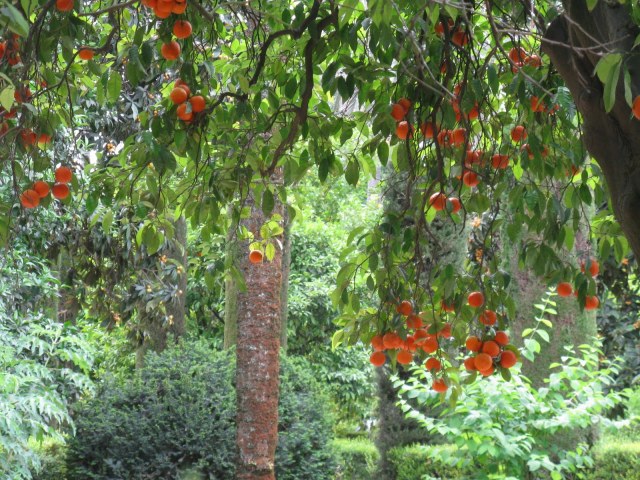
Not mine. It’s time to haul out the big guns, to dream those lighter, warmer thoughts, time to conjure up a djinn of sun and heat and happy. And in my own ever-expanding olfactory universe of wafting wonders, with all I’ve come to learn and love, for dreams of warmth and joy I fall back on an olfactory memory from my childhood and a fruit tree that more than any other tree spells light, breathes heat and exudes happy like no other.

At the age of eight, I moved from Virginia Beach to Fort Lauderdale, Florida, and in one fell swoop, my life was no longer the same. Instead of hunting for apples to steal off a stranger’s tree, we searched for the mangoes that grew in gardens everywhere, and those glowing orange fruits I was once convinced grew in cartons at the supermarket I could suddenly find anywhere I went, in backyards and front lawns, growing in public parks, glowing through the foliage on the way to school in their perpetual, summery glow.

Ever since, whenever I’ve needed to think ‘happy’, when I seek to breathe joy in an instant, nothing at all takes me back so quickly as the scent of…orange. I remember a day in spring I came home from school and had to wait for my mother to return from work, and so I sat on a swing in the shade of the orange, grapefruit and lemon trees in our garden, fruit burning their color through the dark, glossy green of the leaves and the heady, hypnotic, narcotic sensuous perfume of orange blossom in the afternoon heat. Somehow, under that searing subtropical sun, the memory of that afternoon, that orange tree, those blossoms twinkling like fragrant stars amid the verdant leaves became equated with ‘happy’, ‘heat’ and ‘joy’ ever after.

Lo and behold, these (too) many years later, I can open a tiny vial and I am there again… with all my childhood dreams concocted beneath an orange tree, and these many years later, they are not so very changed and the woman I have become is not so very different from that girl on a swing, conjuring all the possibilities for a future that ‘orange’ and all that word implies and all those blossoms made her believe.

The French niche line of Parfum d’Empire was a line I first encountered through a sample sent to me by Helg of Perfumeshrine, when she enclosed ‘Iskander’ with a sample I won in a draw on her blog. ‘Iskander’ was an olfactory tribute to that inspiration of the ages, Alexander the Great, a tribute to the conquests and wonders he encountered through his short yet epic life. That was an immensely appealing idea to a diehard classicist like me, and I’ve come to discover that the Parfum d’Empire line has a definite dedication to those inspirations from the past – inspirations of travel and adventure, history and heritage – what wasn’t to love about that concept for a history-obsessed budding perfume writer?

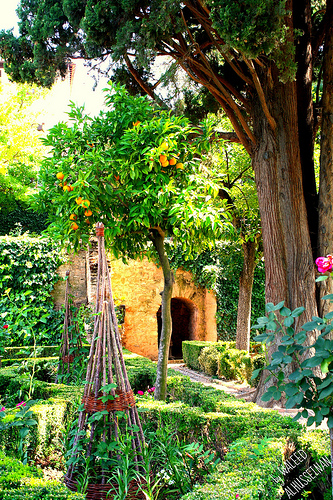
Quite a lot I learned, for now Marc Antoine Corticchiato, perfumer and founder of Parfum d’Empire, has moved from world history to personal history and pays tribute to both his childhood and the ancient pilgrimage city of Azemmour in Morocco with his latest creation, Azemour les Orangers.

If I ever thought to capture my happiest childhood memories in a perfume, starting with my personal Tree of Life, the orange tree, then Azemour les Orangers would be it.

Here is … that eternal tree of my life, too, from the tips of its glossy leaves to its snowy white blossoms, from the twigs and the bark to the glowing orange fruit from zest to juice to pith, the sun-baked earth beneath the tree and a sentient green, salty-sweet breeze blowing in from the ocean close by. It isn’t literal in the sense of, say, Andy Tauer’s Orange Star, and miles removed from another favorite orange blossom of mine, the utterly opulent Serge Lutens’ Fleurs d’Oranger, but it has an extraordinary sense of place and time, not least for being that elusive unicorn creature I never thought I would live to see…an orange chypre.

Breathe it all the way in and you are…there…fully and entirely present in a moment beneath that tree, beneath that warm blue sky, with a waft of the souk around the corner to help shock your senses aware and at one with the tree above you and all it simply is, with the dusty, smoky-sunshine scented earth beneath your feet and a restive whiff of salt and sea wrapping all this wonder in an olfactory bow and tying it up for your pleasure in an emerald green, mossy knot. Moss as in oakmoss, that defining element of chypre that grounds and binds and enriches so many of my great immortal perfumes, a bold and defiant and definite green song to summer all its own.

Most orange-based perfumes with a few exceptions are lighthearted, flirty creations that laugh and giggle and are gone with a song on a summer breeze. Not Azemour les Orangers. I’ve tested this five times on different days, and every time, it has surprised me with its evolution and that green, earthy depth. Sometimes spicier, sometimes cooler and saltier, sometimes with the orange blossom unfolding before my nose in its own ode to joy, and always with the heartbeat of earthy heat and verdant happy that reminds me – lest I become blasé – why I love what I do and why I love to breathe as I do. It is neither old-fashioned nor generically modern, but classic in the best sense, constructed with an elegant sleight-of-hand that keeps my nose marveling that such wonders exist and can be found – even in the freezing black cat nights of a fimbulwinter February that seem to never, ever end.

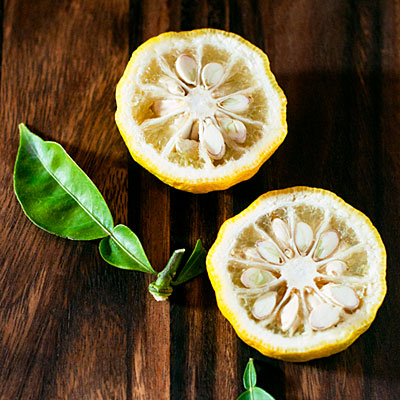
Yuzu Fou, another of Marc Antoine Corticchiato’s creations, shares some notes in common with Azemour les Orangers, but this is a very different take on bottled sunshine with a remarkably different effect.

Supposedly an antidote to the frantic pace of Japanese urban life, I get something entirely different from it. I swear that inside my tiny sample bottle is an imp jumping up and down, singing…

”Wake up! Wake up! Your hibernation is almost over!”

With its zesty open of singing yuzu, grapefruit, orange and kumquat, I am not only awake and aware, but happy about it, too, dancing out the front door leaving a minty-green, kicky verbena trail in the frozen air behind me and nothing at all will ever drag my spirits down this day of all days, I shall grab the world by the tail and show it what I’m worth today. Yuzu Fou is yet another kind of happy, happy in an energetic, upbeat fashion, happy to exude its endless optimism in the face of winter.

But that’s not all Yuzu Fou (Crazy Yuzu) is and not all it remains, because just as with Azemour les Orangers, Yuzu Fou is nothing if not surprising. As that effervescent citrus, verbena and mint fade, it shows a far more contemplative face. Green bamboo accord is listed in the notes along with cedarwood and white musk, and I wonder if they give it that definite feel of Japanese incense I’ve met in other perfumes, adding up to something reminiscent of hinoki but greener, calmer and thoroughly confidence -enhancing.

If current scientific research is anything to go by, the scent of grapefruit can make your surroundings believe you’re up to ten years younger than you are, and at my age, that’s not something to sneeze at! As it dries down and evolves, I feel more and more Zen with every breath, more whole, more centered and less fragmented and believe it or not – still a hopeless optimist!

Both Azemour les Orangers and Yuzu Fou are two defiant, life-affirming laughs in the face of winter, bottled joys to remind you as you breathe them in and marvel as they evolve that no winter will last forever – not even this one!

The Parfum d’Empire line is available at Luckyscent, First in Fragrance and Les Senteurs, as well as directly from the Parfum d’Empire website.

Disclosure: Samples were sent courtesy of the utterly fabulous Nick of Les Senteurs. Nick now has at least twelve more reasons to be thanked  – and adored!

Notes for Azemour les Orangers: Orange, clementine, tangerine, grapefruit, coriander, black and pink pepper, galbanum, cassis, neroli, geranium, orange blossom absolute, rose, hay, oakmoss, henna, woods.

Notes for Yuzu Fou: Yuzu, kumquat, sweet and bitter orange, mint, verbena, neroli, green bamboo accord, cedarwood, white musk.

A whiff of perdition…

The Devilscent Project

A year ago, I had a little project-for-fun on my old blog, Scent Less Sensibilities, in collaboration with Doc Elly of Olympic Orchids. We called it Devilscent. The idea was to create a scent for the Devil as he is portrayed in my rock’n’roll Faustian novel, Quantum Demonology.

What do you know, dear readers, it is now a year later and things have…changed! 

I want to get Quantum Demonology out there, out to where it becomes a viral phenomenon, out where someone wants to get it in print, get it in Kindles, on iPads, and who knows where it could go from there? And what better way to do it in a way no one has ever quite done before – through the medium of…perfume?

A year later, Doc Elly is still very much a part of it. But so are several other very distinguished niche perfumers and some of the best perfume writers and bloggers in the blogosphere.

A year later, we’re going to take it to the next level. Through Facebook, through Twitter, through social media and PR and through the words of our bloggers and the perfumes our perfumers will create for the Devil – not your usual brand of Evil Incarnate – and for his much malcontented wife, Lilith, Queen of the Succubi.

Because in this version, the Devil stalks our hapless Faust, haunts her many dreams and lures her to perdition through…a perfume.

But what would such perfumes be – and what havoc could they wreak?

Read all about it in the weeks to come!

A Bloom From the Banks of Lake Eerie


–  a review of Tom Ford Private Blend’s Black Violet

Certain things shall always and forever be perpetually out of my reach. I may, some sunshiney day, become a bestselling writer (here’s hoping!), I may some day aspire to be an inspiration for others, and some day, I may even be able to swan into certain stores in various locations in certain metropolises and airily wave an Amex card with the catch phrase: “Just give me one of everything, darlings!” I may, so I hope, some day be able to kindle desire in another human being, and if I’m very, very lucky, maybe even someone I actually want in return.

But I shall never, no matter what I do, be six feet tall, a perfect size 0, or be anyone so impossibly hip even Tom Ford might think I’m deathless cool.

There’s something about Tom Ford the designer I just don’t get. Which could very well be that I’m not a six foot tall dead ringer for Bianca Jagger in her Studio 54 days. It could also be that my brand of ‘sexy’ doesn’t necessarily imply ‘slit-to-there’ and ‘slashed-to-you’ve-got-to-be-effing-kidding-me’.

Which actually sums up what I thought about his perfume line, too. I’d never tried Black Orchid or any other main line or Private Blend perfumes, and there they gleamed in their classy bottles, like his entire personal aesthetic…just out of reach. I wasn’t a Tom Ford kind of female, more a ‘Anna Sui meets Diane von Furstenberg in a Whitechapel alley with a dash of Rick Owens’… woman. Tom Ford perfumes weren’t sold anywhere within two hundred miles of me. They were probably gorgeous. As it was, I was already ruined for life when I encountered Amouage.

Famous last words. I’d eat them, but that lemon cupcake I just devoured didn’t leave any room, which is yet another reason I shall never be deathless cool – I eat too much. I was resigned to live out my days the perpetual Tom Ford virgin, and it didn’t bother me, any more than never knowing the wonders of Xerjoff bothered me…too much. Still, that niggling pitchfork of curiosity prodded me on occasion. I would read reviews that made me go… ‘hmmmm’. I would wonder. And more to the point, wonder whether I was, in fact, missing out on the Next Great Perfumed Epiphany.

Lo and behold, somewhere in the world are Great Facilitators with Great Big Hearts who take pity on penniless perfume bloggers with Platinum Amex tastes on back-alley thrift store budgets and titanium curiosity pitchforks. Lo and behold, I’m no longer a Tom Ford virgin.

Lo and behold, the world has shifted ever so slightly on its axis, and even if I’ll never be Nadia Auermann, never mind Bianca Jagger, I can certainly wear a Tom Ford perfume and survive. Just don’t tell him I’ll never be that cool.

When the ultra-darling Carlos with the epically sized heart sent me not one, but four Tom Fords, I was rather taken aback, not just by his generosity (which is legendary), but by which one I reached for as if guided by an unseen hand.

It was…Black Violet, from his Private Blend line. There were other wonders in that little sample pack, other marvels I will certainly review, but my inner Gothadelic won out by selecting something I would never have chosen on my own accord.

So is it dark, or even black? Is it even violet? Will I wake up as a latter-day Jerry Hall?

It is very dark. It is definitely violet. And no matter how fever-delirious, I shall never be Jerry Hall. Damn it.

Black Violet is…a shapeshifting, ghostly flower left on the threshold of some equally phantasmagorical portal of the Otherworld. It is quite possibly one of the strangest perfumes I’ve encountered, and trust me, I’m not at all averse to strange, weird or WTF.

Strange in the sense that this is an eerie perfume. From the initial fruity, sweet citrus burst, a fata morgana flower blooms. Not a violet in the sense we usually think of violet, which is often violet leaf with its fresh, grassy-green laugh in the sunlight, this is all about the violet flower, which is to say, if violet flowers grew on the banks of the river Lethe in perpetual twilight, the only burst of color in the shadows. A violet flower wrapped in a sheath of formfitting, moody, dark, dark wood…a wood of weird and wondrous creatures that shift and dance on the edge of your vision, but do they exist or are they mere figments of your overheated imagination?

Violets that glisten in moonlight and dewdrop instead of dappled sunshine, violets that fade to a mere whisper, a ghost of what was, what you surely imagined, but did you really? For now, we’re brought back to the forest floor and that moonlit dark with a plush, earthy, velvet-smooth oakmoss. Oh, yes…oakmoss. Oakmoss which should lead us into chypre territory and so have me at ‘hello and hell, yeah!’, but this is no man-eating beast of a chypre, this is far too understated, far too much a creature of Faërie, dancing on the edge of awareness, leaving only a glimmer of its ghostly beauty behind, but beauty nevertheless.

Black Violet is definitely a haunting, goth, witchy kind of violet, the kind that sneaks up on you and makes you think…yes, I really should own this, I really, truly should and how can I live without it and surely it’s not that expensive and such is the price of haunting these days and…

And somewhere in there, I blink and I’m brought back to real life and a recent memory of another haunting perfume that this resembles very much to my fever/flu-ish nose…and that stops me cold.

On the other hand, how often does it happen you encounter a bloom…from the banks of Lake Eerie?

Nose: Clement Gavarry.

Notes: Bergamot, citrus, fruity notes, violet, oakmoss, woods.

Tom Ford Private Blend Black Violet (2007) is available at Nordstrom’s, Bergdorf’s and other upscale locations.

All thanks to Carlos, who made this happen! 🙂

Lost and Found

–       on the pleasures of finding misplaced treasures, and reviews of One Truly Great Facilitator

I am not by any stretch of the imagination the world’s most organized person. Although I’ve developed total OCD concerning my work and writing habits and my laptop hard drive is sorted to an electric fare-thee-well, my desk displays all the signs of an easily distracted artist…one catch-all notepad for incidental thoughts, one blue workbook for even bigger thoughts, one black spiral-bound notebook for notes on perfume reviews and blog ideas, one small perfume journal containing a review list with dates, and finally another notebook that contains immortality in 140 characters or less – my #Follow Friday diary, with dates, write-ups, people I add, follow and recommend. This doesn’t include my dictionary/thesaurus, books I’m reading, music CDs (yes, I buy them), things to tape to my Inspiration Wall of Fame, pens, pencils and samples in different stages of disarray. I admire the minimalist Zen mindset, really I do. But until that day I’m able to hire a personal assistant, forget it.

So it was…until I decided to turn a new leaf and get my derriére in gear and get organized. I sat down in my bedroom where most of my ‘fumes are located and sorted through a large pile of bubblepak envelopes, cards and sample vials. Somewhere in a decreasing pile of chaos, I came across a letter I had all but forgotten in the chaos of the last six months or so.

It was a letter from my very first Great Facilitator and indie perfumer Ellen Covey of Olympic Orchids, and I was instantly hit with a large suitcase packed full of guilt trip.

It was – believe it or not – only a year ago I really began to write about perfume, to push my limits in terms of writing in general and writing about perfume in particular, and – true story! – if not for Doc Elly, it would likely never have happened at all. Not only is she one of the nicest people I’ve met this past year of discoveries, she is also – I’m not the only one to say this – one of the most unique. Just as all my favorite perfumers this past year have their own aesthetic vocabulary, so does she. She creates breathtaking true to life perfumes based on scented orchids – her Red Cattleya was spot-on, I discovered at the Orchid House of the Royal Botanical Gardens in Copenhagen last year – and has also made a wide range of mostly undiscovered wonders, some of which I’ve worn – and worn out. It’s a definite  testament to her talent that all her masculine-slanted perfumes have instantly been purloined by the Ex and worn, not that I blame him. They’re that good!

Five sample vials glowed in her letter, named Emergence, Salamanca, Rose Chypré, and Café V 1 and Café V 2. She enclosed another sealed envelope with instructions not to open it until I’d tried them – and I swear, I didn’t. That letter is still sealed as I type. I know nothing of their notes, have blithely forgotten everything I might have read about them elsewhere, and have only my nose and my associations to go on.

Emergence

Emergence is something I can recognize instantly, almost like finding an old friend in a crowded room…because it’s a sibling of another favorite of mine, Golden Cattleya. Golden Cattleya – I reviewed the prototypes here – is a thick, opulent, orange-centered Oriental, just as Emergence strikes me. But unlike Golden Cattleya and its airier, floatier base, Emergence is darker and plusher, with a headier, more animalic version of the drydown I find in many of Olympic Orchids’ perfumes. There’s a lot of labdanum and likely cistus* too in this – not my least favorite note, and it dances out of the vial on an orange-vanilla sunbeam and wraps its tendrils around you in the best kind of oomph-inducing, richly fragrant hug. It strikes me as an evening perfume, one for high heels and a little black dress and a gleam in your eye that might or might know how the night will end…


Salamanca

Salamanca is the most masculine-slanted of the five, a dry, grassy, slightly smoky leather. Leather! Lots of leather…black, soft, spicy yet not understated leather, maybe a touch of birch tar in the mix somewhere, and what I smell as vetiver? Calamus? Yerba Maté? Named for the Spanish town, I presume, it has a definite Latin lover, flamenco vibe…If it were a man, I’d say this would be perfect for Antonio Banderas, not that I would ever complain. It’s very classy, slightly dark, very sexy and very unlike most masculine, slightly clichéd leathers I can think of, and I make a point to try most of them. I absolutely love it, but it’s probably more for a man. This takes a certain amount of cojones, and alas, I don’t have any.


Rose Chypré

It’s such a crying shame rose perfumes have become such clichés, because if you do a rose right, it can satisfy as no other flowers except maybe tuberose and jasmine. I love roses, I love rose perfumes, and I’m not surprised at all this was an instant favorite. This is – I’ll hazard a guess – a Damascene rose, a velvet-red, plush, almost photorealistic rose with a green, mossy pulse beneath it, but not so green as, say, a relation, which would be Etat Libre d’Orange’s Rossy de Palma. I did like Rossy the perfume very much, but I have to say it – I love this so much more for being so perfectly balanced. Delicious. Not so long ago, I tried YSL Paris, knowing it would end in tears, which it did, and bemoaned the fate of the classic, stellar rose. No more. So if you love roses…and chypres that won’t carpet-bomb you to the floor with the patchouli blends that pass for chypres these days – run, don’t walk! Try it and you won’t regret it.


Café V-1

Coffee, anyone? Coffee in perfume gave me all sorts of headaches, once upon a time. This was well before I ever encountered Aftelier’s ‘Tango’, which sold me on coffee. Café V-1 is nothing like Tango, instead it’s a flowery, spicy caffeine jolt to the nose, very different and not in the slightest gourmand. It intrigues me no end as it dries down for getting spicier and darker. I detect cinnamon and more than a touch of patchouli and maybe myrrh, and over and under this little marvel blooms that lovely coffee note – which is dark-roasted and strong yet delicate. If this were a coffee, it would be a single estate Ethiopian mocha bean…full-bodied, floral and with a slightly sweet finish, guaranteed to pick you up and jolt you out of the January doldrums.


Café V-2

Version 2 is a very different cup of java, an effervescent blend  – so sayeth my Dimbo nose – of what seems to be a touch of chocolate, coffee and…wait for it! Mint! Tea?Something that makes me think green. Whatever it is, it shouldn’t work at all, and yet, it does and beautifully so, accentuating the floral aspects without damping down the coffee, except maybe this is more vanillic – coffee with a dollop of cream?. It is decidedly more floral and less spicy than version one on my skin, and I would be hard-pressed to choose between them. It blooms into a smokier, more emphatic coffee as time goes on, and stays closer to the skin. Both of them are coffee notes done right…with respect and enough intrigue to keep you interested and on your toes, and nothing – let me repeat – nothing like so many throwaway coffee perfumes I’ve tried.

I could continue to extrapolate here and say that Olympic Orchids are all…nothing like anything else. Ellen Covey has a definite Orientalist, classic approach to perfume, and a dedication to maintaining her own uncompromising creative vision regardless of what everyone else is doing, which should be both applauded and appreciated. I really don’t know why she isn’t famous, since I think she should be!

Meanwhile, there was that sealed envelope…I quote from the contents:

Emergence

When cattleya orchids first start to bloom, their fragrance is often indolic and camphorous. Emergence represents the first days of the golden cattleya flower. Notes similar to Golden Cattleya, but also include civet, indolene, methyl benzoate and camphor.

Salamanca

It is based on the scent of dry, dusty grass and weeds with hints of old stone buildings, hand-crafted leather, and the jamon that hangs in so many of the shops. (Jamon is the air-cured, spectacular ham of Spain)

Rose Chypré

A classic chypre composition centered around the fragrance of rose. Specific notes include a cocktail of musks. Oakmoss (!!), clear labdanum, patchouli, rose de mai absolute, cyclamen, bergamot, ylang ylang, petitgrain, aldehydes, red mandarin and red thyme

Café V 1 & 2

Named for a famous café in Seattle’s Capitol Hill, specific notes include balsams, myrrh, cedar, coffee absolute, cacao absolute, a vanilla accord, Madagascar vanilla tincture, a leather accord, nutmeg, cinnamon and cardamom. Version 2 also includes a creamy note.

So I guess I got a lot of the notes right, and not a few associations, too. But I’ve said it before and I’ll say it again…if not for Ellen Covey, my nose, that questionable collection of cartilege, would be far less educated. It began with Olympic Orchids. It seems only fitting that a year later, I found her again. Her perfumes merit all the praise they can get  – and so does her dedication! If you’re bored with the present sorry state of ho-hum perfume releases, if you’re in search of something truly original, if you’re looking to expand your horizons or even if you’re such a niche diehard you’re looking for new talent, give Olympic Orchids a try.

* Labdanum and cistus – although they both stem from the same plant, the Mediterranean rock rose – are by no means the same thing. Both come in several different varieties – absolutes and CO2 extracts – that on their own are so rich and complex, it’s hard to believe they’re from the same source.

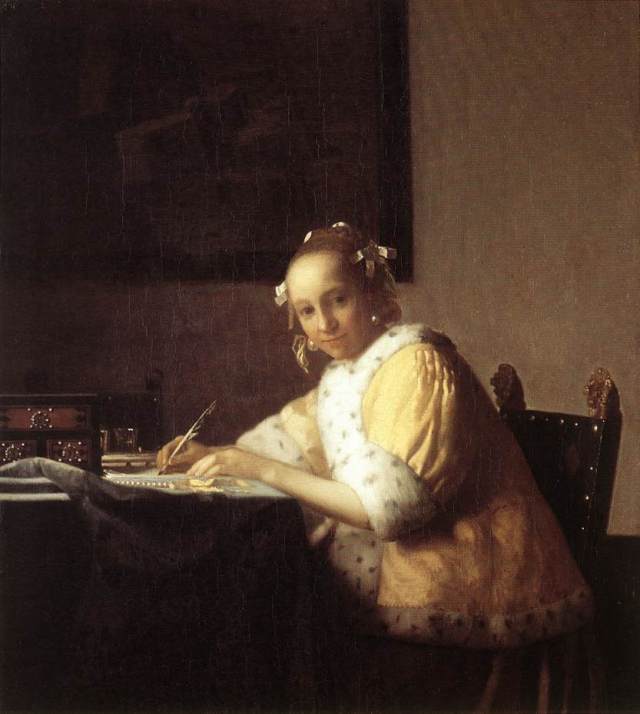
Images: Painting: A Lady Writing a Letter, Jan Vermeer, 1665-66

Illustration: “Square’s Waldo”, by Jonah Block, courtesy of Society6