Bad To The Bone

klaus-kinski-211079

–  a review of Kinski by Kinski

In the normal state of affairs, I tend to shun celebrity scents like the plagues upon humanity they are. I find most of them poorly composed according to the ten-second sale philosophy (usually by Coty, who once upon a storied time never catered to the lowest common denominator), or created to exploit Hot Celebrity X, Y or Z’s personal brand of ‘style’.

But every once in a blue moon, a perfume comes along that seems to wrap that idiosyncratic ‘style’ and tie it all up with a beautiful bow to add another layer of definition to an iconic figurehead. I could mention Etat Libre d’Orange’s Eau de Protection and Like This, for Spanish firebrand Rossy de Palma and Tilda Swinton, patron saint of Perpetual Cool, or even the few perfumes I’ve tried by Dita Von Teese, all of which were made with a far greater deal of care and dedication.

And then came this one. Only this time, it was not at all market hype or perfumista buzz that caught my attention.

This time, it was personal.

You see, two 21st-century sisters of definite literary bent and inclination independently of each other decided that Anne, Emily and Charlotte Brontë shouldn’t have all the fun for themselves.

One was a graphic artist, the other a journalist, but both were writers on the sly in between family cares and career woes, sneaking off to commit either unspeakable acts of depravity or unspeakably depraved prose to the virtual page, one writing within the framework of a crime novel, the other from a Gothic horror perspective, one in her native Danish and the other in English.

No matter how life tried to get in the way – as it certainly did – they would finish these two books, they would scrawl their names on the walls of literature in bloody ink and seal the deal with a bloody handprint, they would both of them do what it took to get themselves out there… and any detractors could think whatever they pleased.

So between late September and December of last year, they both did just that and were published – by a big-name Danish publisher and by an indie Austin ditto. One to (mostly) rave reviews, the other to… four, all told.

To commemorate her epic feat of imagination and determination in the face of distraction, one of them bought a perfume.

This perfume. This perfume which promptly blew the other sister’s mind.

The perfume buyer – and crime writer – was my sister Stephanie, and the other sister – and Gothic novelist – was yours truly.

The biggest surprise of all was this one: My dearly beloved sister and I have completely opposite tastes in perfume. She is a petite brunette, and has favored what I’ve come to call skank bombs for either gender for as long as I can remember her wearing perfume. I am a slightly less petite blonde who has vastly preferred epic, steely green chypres for nearly as long as I can remember.

Yet one sniff of this masculine wonder did me in.

Kinski by Kinski was made by perfumer Geza Schoen to commemorate the twentieth anniversary of actor Klaus Kinski’s death in 2011, and apart from it being one of the most unusual perfumes I’ve ever sniffed, it is also one of the most evocative, conjuring up Klaus Kinski’s ghost as effectively as any Werner Herzog masterpiece marathon at your favorite arthouse cinema.

The remarkable thing about Klaus Kinski the actor was that more than his personality, his physiognomy or the roles he chose, was his ability to literally eat the scenery – and sometimes, his fellow actors – in everything he played. Watch any of the movies he made with Werner Herzog, and I dare you to look away, because you can’t. His intensity was so ferocious, it’s a wonder we have any film stock left with him that didn’t self-combust in the can. I double-dare you to forget those roles in those movies, because you can’t do that, either.

Yet great artists are rarely paragons of virtue, and Klaus Kinski the man was no exception. Whether or not he fell prey to his own self-concocted outrageous, eccentric public persona or simply had to constantly live up to his own disrepute, the fact remains he was at least as complex a man as he was as an actor.

So how on Earth do you manage to bottle all that masculine eccentricity and iconoclasm?

Geza Schoen chose to add in many of the things Klaus Kinski loved in life. White wine accord (according to the Kinski website), a viridian vetiver, flowers, juniper, a pounding lecherous animal heartbeat that pulses from beginning to distant end and the most genius subversive ganja accord this side of Maui Wowie.

If you’re thinking Kinski the perfume will get you arrested in public spaces and get you sidelong smirks and full-body searches from TSA officials, think again. That ganja is less the aroma of inhaling with a fury and more the texture and feel of green, crystalline buds. But it’s rolled so tight into a glossy green spliff of castoreum and vetiver, you wonder why no one has ever done this before.

All of it so wrong, so impossible and so improbably, off-the-charts sexy I’m profoundly grateful I’ve never encountered this on a man. I’d devour him, and to Hell with the fava beans and a good Chianti.

Just when I thought it couldn’t get better, it does.

Because that animal pulse never strays, that scrumptious vetiver never departs – and neither does the Maui Wowie – but suddenly, a salty marine tang splashes in on a high tide, and it’s neither the dreaded ‘aquatic’ or (almost worse) ‘ozonic’, but simply sunshine, sand, salt and sea. And animal, vetiver and spliff.

So give yourself over to this summer’s afternoon of dolce far niente to find flowers blooming, too, not in any obvious, easily demarcated way, but simply as a sweetly scented posy to seduce you past caring.

No worries – this jungle cat is still purring along beneath it all, still lazily flexing his claws well into the mossy, salty, spicy-musky drydown many, many hours later, until you suddenly realize with a start…

You’ve been had – and by a perfume.

I pay no attention to the gender divides in perfumery – I wear what I like. So when I want to walk on the wild side, when I want to air out my inner rock chick, when I want to define myself in the spaces of my contradictions and defy convention and propriety, I’ll wear Kinski.

You see, if Klaus Kinski with his outsize personality had been born twenty or thirty years later, the only thing he could have possibly become was a rock star.

A rock star who would be, as indeed he always, always was…

Bad to the bone.

Notes (from Fragrantica): Cassis, juniper berry, pink pepper, castoreum, marihuana accord, nutmeg, plum, orchid, magnolia, orange flower, rose, benzoin, vetiver, cedar, patchouli, styrax, cistus, ginger, musk, moss, ambergris.

Kinski by Kinski is available as a 100 ml eau de toilette (with outstanding 12+ hour longevity) at Luckyscent.

With a kiss, a hug and bathetic gratitude to my sister and fellow author, Stephanie Caruana.

Thanks to Du Dumme Sau for invaluable research.
An Infinite Summer

villa-san-michele_12_g12

–  a review of Profumi Bruno Acampora Blu

In these dun, drab days when the hangdog brown hound days of winter stretch out in front of us as endless as the Pacific ocean, it seems as if summer is an impossible dream of heat and light. It exists only to torment those of us in the Northern Hemisphere who crave dreamier, happier alternatives to rain, to sleet, to snow and wind.

Last night, as the rain drummed on my rooftop and slithered down my windowpanes and I thought chill and rain and wind were all I would ever know, I remembered a treasure I brought back from Florence that might – you never know – banish those winter blahs to the cold, dark, dank shadows from which they came.

This little treasure and I had met before, met just long enough for me to turn my head and realize precisely just what a treasure it was, before life, literature and distractions got in the way. Yet last night it seemed I remembered it by chance, serendipity or synchronicity, who can say?

In a small sample vial this little cerulean treasure bloomed, aptly named Blu.

The Naples-based perfume house of Bruno Acampora is one of those cult secret brands so über-cool many of you may not have heard of either the elegant Bruno Acampora himself – jetsetter, globetrotter, perfumer – or the perfumes, but dear readers, I tell you… they are all of them beautifully composed, and unusually presented in their aluminum flasks with cork stoppers and wax seals, like fragrant Graeco-Roman artifacts someone encountered while strolling through the ruins of Herculaneum.

Yet Blu is neither strange nor anything less than very modern. It is a deceptively simple take on that terror of all flowers, the tuberose, but it’s not at all like any other tuberoses I know, and I know most of the tuberoses worth knowing. Not the intimidating Gothic splendor of Serge Lutens’ Tubereuse Criminelle, nor the velvet-earthy-tuberose chocolate of Exotic Island Perfumes’ Flor Azteca, nor even the wintergreen salicylate wonders of Editions de Parfums Carnal Flower.

Instead of a journey into the dark heart of tuberose, Blu offers another kind of journey, another kind of mood and another kind of emotion, all of which can be wrapped up in the happy Italian phrase:

Dolce far niente.

This is a tuberose that lives for that exhilarating moment where you find yourself in the absolute perfect place at the absolute perfect time in an absolutely flawless state of mind. This moment is not the time to do unless it’s to laugh nor to go unless it’s to dance, but simply to be whole, entire and entirely in this singular instant, when life is good, love is grand and the moment and the summer all somehow gild themselves in your memory – or your fantasy, at least.

Blu is another secret story tuberose never told on your skin and you never suspected. Somewhere in the length and breadth of all a tuberose contains lay a carefully concealed and very happy laugh just waiting to burst. Who knew?

I didn’t.

A laughing tuberose that never veers from its happy state of mind, not when it’s joined by a flirtatious wink of an orange nor even the dappled shade of sandalwood that flickers underneath Signorina Tuberose. Some long, long time later, she leaves with a wave and another girlish giggle, and only the sunshine yellow ylang ylang is left to sweeten the memories she left in her fragrant wake.

For if this tuberose is no signorina, she is at least and always young at heart and in her soul, which is really where youth matters – and is needed! – most of all.

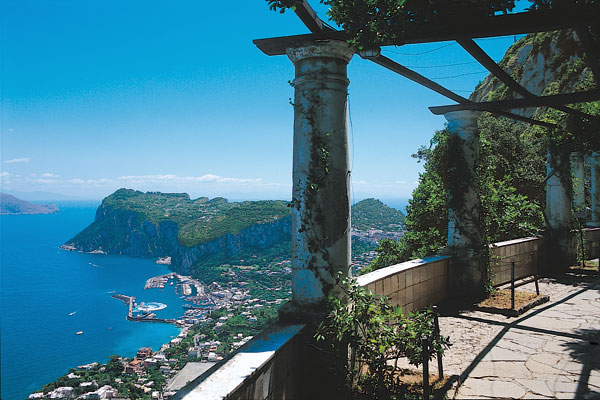
Meanwhile back in a gray, drab, wet corner of Northern Europe, I am carried far away on an superbly elegant tuberose laugh, to the magical isle of Capri and an infinite summer as incendiary blue as the sky above and the sea far, far down below, as blinding bright as the white marble balustrade and the sparkling jewels of your sandals, when life consists only of the sweet, flawless nothings of being alive in a beautiful moment as only a tuberose moment could ever hope to be.

capri_monte_solaro_1

When the sea, the sky and the summer seems artless, happy and infinitely, perfectly blue. The statue above points the way… to Capri, to dolce far niente, to the many shades of blue below and to an exuberant tuberose laugh called Blu.

Notes: Tuberose, orange, sandalwood and ylang ylang. (Although it’s not listed, I detect a smidge of jasmine in there, somewhere. Not a bad thing.) Longevity is outstanding, but trust your local sillage monster . a little goes a long way! 

Bruno Acampora Blu is available from Luckyscent and First in Fragrance as both a perfume oil and as an eau de parfum.

With very special thanks to Sonia Acampora, who did so very much to welcome and illuminate an unknown Danish perfume blogger at Pitti Fragranze 2013.

Disclosure: A sample of Bruno Acampora Blu perfume oil was provided by Sonia Acampora. 

Fleur Moderne

modernviolet

–       a review of DSH PerfumesVers la Violette from the Passport to Paris Collection

Pity the humble violet. Today, violet perfumes as they were originally made have a slight bashful whiff of Miss Havisham and Victoriana, of simplicity, humility and faithfulness, as if, in other words, the perfumes made from this modest but heavenly scented flower have somehow been imbued by default with all the loaded trappings of Proust’s notorious madeleine – offering nostalgia in a bottle.

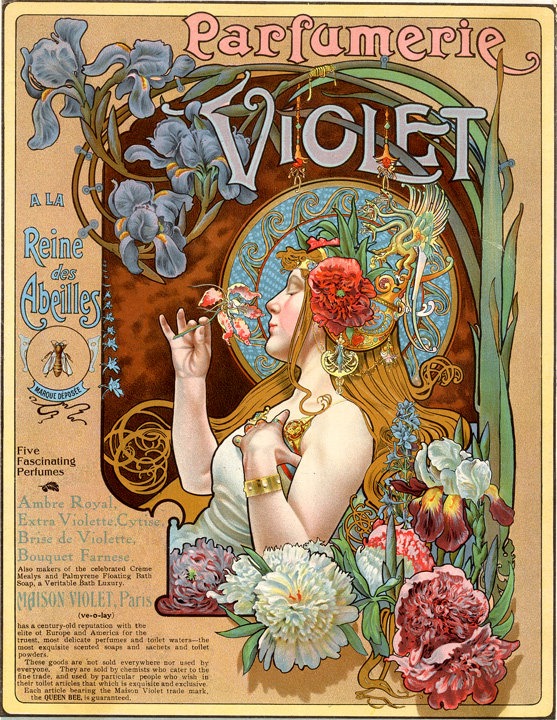
It’s hard to imagine in these anything goes days, but once upon a time in the decadent, alluring Belle Èpoque era of Paris with its equally alluring swirling, whirling, dizzying lines and mysterious femmes fatales, with its Symbolist poetry, Pointillist paintings and louche air, back in the day when all the world was perched on the brink of momentous change, that shy little violet ruled supreme in the perfume world. Ladies of distinction and easy virtue alike were so enamoured of its sweetly fragrant, verdant spring air that violet perfumes were in effect the perfume bestsellers of their day.

76418_original

No matter what these mesdames and demoiselles of the Belle Èpoque might have thought to the contrary, those beloved, sweetly romantic violet perfumes did not in fact contain a single bloom, but another newly synthesized aromatic component that had recently arrived for the perfumer’s organ – ionone (alpha- and beta-ionone, to be precise). Coumarin may get all the justly celebrated press for Houbigant’s Fougère Royal and Guerlain’s equally revolutionary Jicky, but ionone was just as important, not least for the enormous bouquet of violet soliflore perfumes that began to bloom in liquid at around the same time.

Let those dandies and Des Esseintes-wannabes wear their narcotic ambers and tuberoses, their oh-so fashionable fougères, those ladies seemed to say.

‘Give me la violette and my heart shall always be an eternal Spring.’

I’m not sure about the previous statement, but it is a fact universally proven on this blog and elsewhere – I love violets. The flowers themselves are my favorite part of spring, candied violets do wonders in tandem with dark chocolate (never more so than in that great Baudelaire poem of violet, aroma M’s delicious Geisha Violet), and not a few other violet perfumes have also stolen my own fickle heart – Tom Ford’s Black Violet, Sonoma Scent Studio’s Forest Walk, the neon violet of Guerlain’s Insolence and perhaps my favorite of them all, Serge Lutens’ Bois de Violette. I also once managed to imbibe violet (violet liqueur is a thing) in the form of a virulent purple concoction known as Parfait Amour since hope springs eternal, but I didn’t find it there…

Hippolyte_Petitjean_-_Paysage

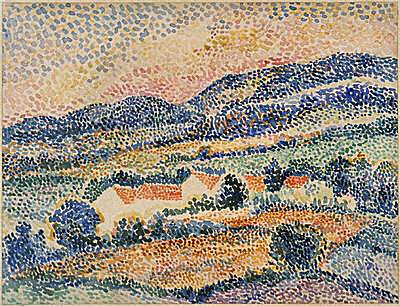
Yet somewhere in those curvilinear, asymmetrical lines of perfume, in the vibrant Pointillist paintings of Hippolyte Petitjean and the overall arc of the Denver Art Museum’s Passport to Paris exhibition now on show, perfumer Dawn Spencer Hurwitz managed to reinvent this now classic perfume trope, le parfum violette, and make it new into something that feels not at all out of place or step with the 21st century.

Her inspiration came from Hippolyte Petitjean’s painting Village from 1893. I’m not sure it’s the painting above, since Google Images was not cooperating, but if Dawn were somehow hoping to translate that hazy, sun-drenched landscape painting into a perfume, she certainly succeeded.

For Vers la Violette is never less than violet, and nevertheless as state-of-the-art modern as this day, this moment, this instant I type away on a machine not even Jules Verne could have imagined. Just as I think I can say with some justification the august Aimé Guerlain could never have imagined anything like Vers la Violette, but if anyone could understand it as something more and more audacious than the mere sum of its parts, surely he would.

In my opinion, no one in perfumery today on either side of the Atlantic can touch Dawn Spencer Hurwitz’ innate and slightly uncanny understanding of the historical context of perfumes. Whether recreating some of the fragrances of ancient Egypt or reinterpreting a comprehensive work of fashion as she did for her YSL retrospective, she not only manages to convey precisely what those pivotal perfumes meant and how they were perceived in their time, but also to refine them and improve them, and with Vers la Violette, she gives the world a violet to make the heart sing and the mind dream of purple haze over a country field, of spring and future possibilities.

Except somehow in this pale gold liquid filigree, an urban heart beats beneath it all which gives it an edge on the violet competition and takes it far away from any nostalgic memories of bashful blooms on a forest floor.

Make no mistake – Vers la Violette is also a pun – on ‘vert’, and green is precisely how it starts to sing. I detect bergamot, galbanum and lemon certainly, along with a quite a lot of violet leaf, but there’s nothing at all bashful about this purple flower. She sings a little softly underneath the orange blossom, the rose and the iris to begin with, which makes this about very much more and more multi-dimensional than simply ‘violet’, but when she finally enters the spotlight, she stays. And stays. Winding her delicate vines around that ethereal floral heart and on through a mossy, soft suede drydown with a hint of hot summer concrete splashed by a passing purple-violet thundercloud.

As much as I like violet notes, and violet leaves, and violet leaf perfumes with their grassy-green optimism, it’s this suede-y, violet-flavored wet steamy concrete thing that slays me. It takes a bit more than the mere name ‘violet’ to make me sit up and pay attention to what I’m sniffing, so I’m partial to the unusual, and Vers la Violette, for all its fabled historical associations with ionone, with violets, and with Les Femmes Modernes of Belle Èpoque Paris, is a most unusual violet. I’ve consistently called it ‘she’, but Vers la Violette is easily, breezily unisex and more modern and certainly more elegant than any mere blushing bloom could ever be.

I’m not quite sure how many more ways I can say I love it – most deeply and sincerely – except that sample vial is going fast, for give me a violet, give me this violet and I shall remain forever young…

Notes (from Fragrantica): Galbanum, bergamot, lemon, violet leaf absolute, cyclamen, orange flower absolute, ionone, orris CO2 extract, Bulgarian rose, wood violet, Mysore sandalwood, oakmoss, labdanum, suede, civet.

Disclosure: A sample was provided for review by Dawn Spencer Hurwitz, for which I thank her from the bottom of my hugely grateful heart. 

A Kiss in the Gardens of Love

shalimarsrinagar

–       a review of Guerlain’s Shalimar Ode à la Vanille sur la Route de Madagascar

Dear M. Wasser,

We really can’t go on meeting like this. You in your elevated stratosphere at the venerable Maison Guerlain, and I, one lone perfume writer in the void you likely are not even aware of, even as I’ve applied my suspect prose to some of your works and on occasion been less than charitable in my estimations.

If you’re bracing yourself for the next barrage of mellifluous dressing down, I regret to disappoint you. This will not be one of those reviews, because as you are surely aware, s*** happens.

And in this instance, one of the greatest and grandest and most celebrated perfumes of the 20th century, an ode to love, to a garden or two, to a starry-eyed Moghul emperor and his dearly beloved, and to the perfume that somehow managed to wrap all of it up in one sumptuous embrace and sear itself into the memories of millions of women who wore it and the men who adored it…

Shalimar.

It pains me a great deal to say this, yet say it I must – much as I appreciate its splendor, its opulence on anyone who isn’t me, its sheer operatic scale of influence and scope, I am no acolyte at the temple of Shalimar.

You see, M. Wasser, Shalimar has one fatal, Freudian flaw.

My mother wore Shalimar. In fact, it was her favorite Guerlain, which is the very reason I can never, ever wear it.

For as all daughters must, I, too defined myself in my mother’s despite, and on that long-ago May day at Guerlain on the Champs Élysées, when all of its wonders were mine for the taking and it was time to choose my own manner of fragrant explication, I chose not Shalimar but Jicky. Life had yet its pleasures proved, and I was nowhere grown-up enough for this Grande Madame. I would have felt like a four-year-old dressing up in Maman’s hat and high heels, only to hear her laugh at my audacity.

No matter.

Nevertheless, I remembered watching you in the BBC documentary ‘Perfume’, and how you were given the unenviable task of rejuvenating this Grande Madame for a younger clientele, saw your trepidation at messing with a masterpiece, and who could blame you?

Stuck in my nowhere corner of northwestern Europe, Shalimar Parfum Initial was alas nowhere available until this past fall, when I encountered it in a Florentine department store, only to find myself bemused to discover that perhaps my own issues with Maman had made me more than a little biased for no good reason at all.

Because I adored it even if I am no longer young in the slightest. It stuck in my mind like all the best fragrant stories do, with a tantalizing ellipsis that implied… to be continued.

As it will, I can assure you.

One day, as friends with a common passion do, one dear perfume friend sent me a sample of your 2012 release, the euphoniously and impossibly named Shalimar Ode à la Vanille sur la Route de Madagascar, made to commemorate an exceptional harvest of Sambava vanilla, and whatever hesitations I might have had in my own biased history with La Grande Madame were swept away in an instant by a deliciously decadent vanilla cloud of… oh, be still, my beating heart!

I know it well. Your deft touch of decadent gourmandise has undone me before in the now sadly discontinued Iris Ganache, and Jean Paul Guerlain’s sumptuous Spiritueuse Double Vanille is one of my own exalted vanilla thrillers.

No doubt as Jacques Guerlain certainly intuited and Jean Paul was well aware, you surely know that vanilla has a rather unique effect on the human mind – it elevates our perception of all our other senses, whether tasted or inhaled.

You see where this is going.

Once upon a time not so long ago, I trained as a pastry chef, and came to know that not all vanillas are created equal. The flirty floral dolce far niente of Tahitian vanilla, the no less floral, earthier Mexican vanilla, which was used in this year’s Ode à la Vanille and that grande dame of them all, Bourbon Madagascar vanilla with so many woozy, boozy, woody, deliriously rich symphonies of aroma it’s almost an insult to call it mere ‘vanilla’.

So here we have your tribute to an exceptional harvest from Madagascar’s northeastern Vanilla Coast, a Sambava vanilla dancing in tandem with a reorchestrated Shalimar – less leathery and animalic than its grandmother, and yet, one thing about it really makes my sweet tooth ache.

The name. What was the marketing department thinking, apart from humiliating non-French speakers at Guerlain counters and having a good laugh at their expense? For quite a few people, French is quite bad enough, thank you. So for the purposes of this review and to distinguish it from its illustrious ancestor, I shall call it Shalemur.

And although I would not necessarily label Shalemur ‘cute’, it is certainly at least as fluffy as any lemur.

Certain elements of both your own Iris Ganache as well as Shalimar are immediately apparent – its seamlessly constructed iris-y bouquet de fleurs (jasmine and rose, so they tell me) but the dark, earthy iris heart dancing its own delirious tango with cedar and patchouli is only too happy to bring in the bright Malagasy sunshine for the journey too, the bergamot, the mandarin and the lemon adding their own macaron de citron laugh, but front and center finds this… vanilla. Warm, enveloping, sweet yet not sugary in the slightest, it’s the kind of megawatt superstar vanilla other vanillas aspire to be when they grow up. I’ve been hard-pressed to tease apart the many elements of Shalemur, because basically, who the heck cares when it’s this good? The perfume writer bangs her head against her keyboard in frustration, whereas the woman floats away on a fluffy cloud of iris, cedar and that dangerous, erotically charged vanilla, cooking up her dangerous, vanilla-charged dreams and the rest be damned.

Hours upon hours of them, and it’s all your fault, M. Wasser. Much, much later, Shalemur becomes woodier and darker, with incense overtones, opoponax hints and tonka bean shadings and it’s a marvel I have any intellectual capacity to think at all by now.

It boils down to an old Moghal love poem in perfume:

If there is a Paradise on Earth, it is this, it is this,

it is this.

Ring-tailed Lemur Love

Lemurs do it, too. This insidiously lovely, decadent, delirious ode to vanilla is a stolen kiss in the Garden of Love.

Whoever knew it could be found…on the way to Madagascar?

Yours most sincerely,

The Alembicated Genie

Notes for Shalimar Ode à la Vanille sur la Route de Madagascar: Mandarin, bergamot, lemon, cedar, iris, patchouli, jasmine, vetiver, rose, leather, sandalwood, opoponax, musk, civet, Sambava vanilla, incense and tonka bean

So far as I’ve been able to determine, Shalemur is becoming nearly impossible to find. But if you do, let me know!

With profound thanks to Ruth and to Maggie.

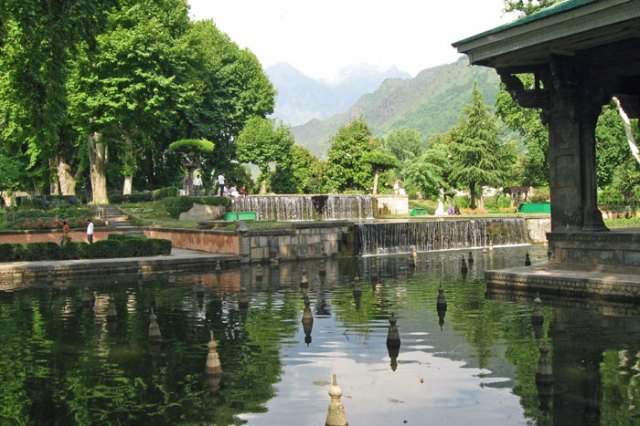
Photos: From the Shalimar Bagh gardens of Srinagar. And two lemurs of Madagascar.

Spelling Eternity

laviergedefer

–  a review of Parfums Serge Lutens’ La Vierge de Fer

When rumors began to circulate some months back about a new Serge Lutens perfume named after a medieval torture device (I’ll be getting back to that one), you can imagine that a discussion ensued on a perfume forum I frequent as to what that name might imply in olfactory terms – or not. Never mind we legions of Serge Lutens acolytes will always be insatiably curious about the next launch, certainly curious enough to feed the rumor mills and grease the wheels of our own olfactory imaginations.

But a medieval torture device?

Some stated flat out they would rather drop dead than wear anything so euphoniously named simply for the associations that came with it, while others among us have many fond memories of a rock band bearing that name’s English translation and were already flashing the horns in anticipation, all allegories of the Inquisition or indeed our mortal souls be damned.

So let me start there. The Iron Maiden as it exists in the public imagination today was a hoax. No historical evidence suggests it even existed until 1793 when the German philosopher Johann Phillipp Siebenkees became inspired by a reference in St. Augustine’s ‘The City of God’ to invent a particularly chilling example of manifest human cruelty. The most famous, known as the Iron Maiden of Nuremburg, can be dated no earlier than 1802 and would have been patently counterproductive as a torture device.

Meanwhile, the diabolical duo of M. Lutens and Mr. Sheldrake pulled out the rug under all our fragrant and/or morbid phantasms with La Vierge de Fer and in the process confounded us all. Again.

Knowing something of Serge Lutens’ propensity for audacious and inventive florals, I could have half-expected something at least as outré as its name, but also – experience is a witch – I know enough by now to expect the unexpected, which was precisely what I got.

La Vierge de Fer is indeed a floral, indeed a novel interpretation of a lily, but this lily bears no resemblance to Un Lys. Forget all you know about lilies and take a walk on a wintry path where gothic flowers bloom, as it begins to bloom in a huge, frilly, feminine pouf of aldehydes as blinding white and frigid as snow.

The lily grabs those aldehydes in moments and keeps them close by as a demure lily of the valley sidles in between them, but both the lily and the lily of the valley are immaculately scrubbed clean of all their earthier memories, suspended in an endless aldehydic mid-air somersault like flying floral trapeze artistes, and the safety net of arctic incense, a touch of chilly vanilla and white musk waits an infinite space below as they swing back and forth between the perpetual lily, lily of the valley in a morally ambiguous aldehydic love triangle. Where aldehydes are usually used as top notes, here they’re present front, center and nearly all the way to the basenotes some long hours later, as cold and nearly as bleak as a frosty December night before they give way to the no less chilly, steely incense, vanilla and metallic white musk at the base.

After multiple wearings this past fall, I’m still not sure whether this is a perfume, a benediction of light or a curse along the lines of that Chinese proverb: ‘may you live in interesting times.’ I suspect it may be all three at once, but bear with me…

According to the enigmatic press release, La Vierge de Fer was partly inspired by Joan of Arc, Picasso’s Les Demoiselles d’Avignon and even memories of M. Lutens’ mother. Yet I sense an artistic theme in many of Serge Lutens’ latest releases that not only runs counter to our usual expectations of former fragrant and etiolated Oriental bombast, but also makes sense in terms of further explicating a personal aesthetic. I was reminded of M. Lutens’ own photographed demoiselles, those pale, sublime, elegantly articulated creatures of perfection which seem to exist in an alternate, timeless universe that keeps the rest of us mere mortals at a distinct, chilly and intimidating distance even as we are helpless to surrender to their bewitching spell. Even as we wonder whether their peerless complexions and enchanting eyes are masks concealing another kind of prison.

So I wonder at La Vierge de Fer and the other recent releases that have also highlighted florals in new and compelling ways: La Fille de Berlin, which was the tale of a thorny rose, Vitriol d’Œillet, the fiery carnation with teeth, Bas de Soie with its cool, restrained hyacinth or De Profundis with its intimations of impending mortality and chill frissons of chrysanthemum, violet and incense. All are far removed from the usual olfactory tropes of ‘floral’, and all are usually recreated in plush, dense fashions, except somehow, M. Lutens and Mr, Sheldrake have lately created florals as diaphanous as chiffon even as they are no less plush than before.

Make no mistake – La Vierge de Fer is a stunning, beautiful perfume. I find it not at all boring or linear. Although I do suspect those blinding, vivid aldehydes are not entirely benign…

And I’m reminded of a favorite fairy tale, Hans Christian Andersen’s The Snow Queen in the depths of La Vierge de Fer. Where a little boy named Kai is afflicted with a splint of a goblin mirror only to see the ugly in the world, and is abducted by the beautiful Snow Queen to the far, far North, where he sits at a frozen lake trying to assemble a puzzle to spell the word ‘eternity’ to achieve his freedom.

In the fairy tale, he only succeeded when his childhood friend Gerda after endless tribulations found him by the lake and melted the splinter in his heart with her tears, and the puzzle spelled eternity as they left the realm of the Snow Queen and returned to the world, and it was no longer winter, but glorious summer.

And at long last, the lilies are in bloom beneath an infinite blue sky, spelling out that chilling, endless word…

Eternity.

Notes: (my own impressions) Aldehydes, lily, lily of the valley, incense, vanilla, white musk.

La Vierge de Fer is an exclusive eau de parfum available as a 75 ml bell jar from the Palais Royal in Paris, from the Serge Lutens website for EU customers and from Barneys NY.

With profound thanks to Jack for the opportunity.

Photo: Detail from Alexander McQueen’s Haute Couture presentation, Autumn-Winter 2008.