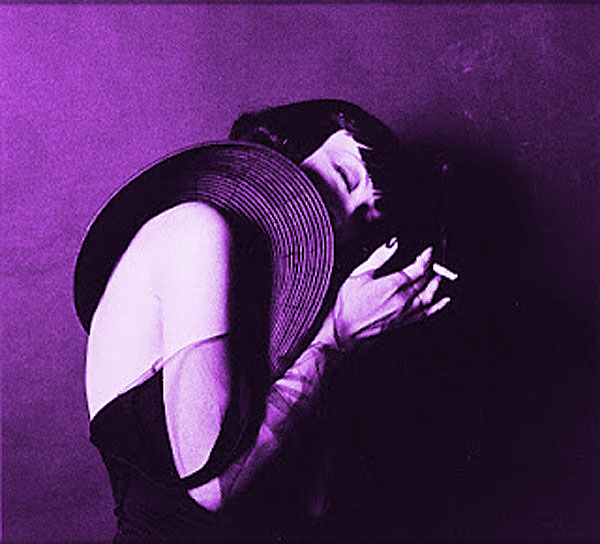
A Mischievous Muse

lavenderkiki

 – a review and a tale of vero profumo Kiki

Today was one of those breathless summer days in Paris with the metallic taste of impending thunderstorms in the air, a hot tetchy, moody afternoon where the dark gray clouds that loomed so ominous to the south had somehow worked their humid, moody, tetchy ways into the very paint and canvas, and even Foujita had to give up and shrug that Gallic shrug he worked so well, to say…

“Pas plus aujourd’hui, ma chèrie. The paint…it sweats even more than I!” At that, he mopped his brow and polished his glasses, shrugged again, and laughed that laugh an artist laughs when he knows the moment may be lost for now, but the time will come again, as time always does.

And even though I lay on the chaise as naked as the day I was born under the dappled shade of the plane tree in the courtyard, finally cool after a long, sudsy soak in his bathtub, I could only agree, and we said our amiable goodbyes as I dressed, tweaked his nose with a laugh as I left, and made my way down the Rue Delambre.

What could happen on such a hot afternoon, what to do and who to see? I felt the summer work its way beneath my dress, felt my stockings rustle against my skin. Even they seemed too much, too thick for such a summer day, where all the windows down the street were open to the still air, when all of Montparnasse and therefore all of Paris groaned beneath that leaden sky, and so I turned the corner and came to La Rotonde, which was nearly empty at this hour, most of the clientele sleeping off the wine of dejeuner in their studios with their loves and muses.

“Gaspard!” I called to the waiter as I walked in. So much cooler in here, out of that merciless heat. “A pastis today, I think, cigarettes of course and perhaps a citron pressé as well. Make sure the water is very cold!”

“Kiki! Foujita paid your tab this morning, Said you were posing for him this afternoon. So how is l’art moderne on this hot afternoon?” he laughed back as he wiped the counter down with a rag.

Très moderne and très artistique, Gaspard, always!” I pointed to a banquette table beyond the bar, unoccupied except for a dark man with an interesting face who sat at the other end and eyed me with a great deal of interest, but then again, they always did at La Rotonde.

I headed for the Ladies room to wash off a dark green splotch of paint on my hands I must have received when I tweaked Foujita’s nose and to take off those beastly hot stockings and the garters that held them much too close and far too tight to my skin. Even silk was too torrid for such a day.

Madame Lenois, who normally tended the Ladies’ powder room, snored away in her chair behind her counter full of face powders, feminine sundries and eaux de toilettes, overcome by the July afternoon, but someone had left a pink felt pochette tied with a silk string behind on the sink since she slept, or it should not be here…

I glanced to the door, but it remained closed.

I removed the garters and rolled my stockings off with a sigh of relief as I felt the air on my legs. After washing the paint off my hands with Madame’s excellent Marseilles soap, I opened up the pochette and discovered two small vials. Perfume? The elixir of youth? Divine madness?

Only one way to find out!

Perfume! Alors! Oh…and such a one…

As I dabbed a few drops of one on my left hand and down my décolletage, a few sprays of the other on my right, I was transported in a heartbeat, far, far away from Montparnasse to Bourgogne and grand-mère so long ago, to M. Simon’s lavender field beyond the village church, blooming such a burning shade of purple amid the endless vineyards it seemed to dance beneath the summer sun, when simply to breathe in became its own singular happiness, that happiness I kept so close in spite of all the hard lessons and sharper secrets Paris taught me. There was no hard and no sharp in these two little vials, no secrets I couldn’t sing in any cabaret with all the conviction of my almost twenty years, just the eternal green, herbal, floral dance of lavender itself repainted sweet as crème brûlée and more daring, reinvented as new and as artless as a limitless blue sky.

On my right, that lavender bloomed as just as purple but perhaps not so sweet. It wore its mischief cut a little lower and a not a little fruitier, and danced a measure of its own around and around its lavender heart, no less grand and no less burning.

I had to sit down a moment on the setee in front of the mirror, overcome by the memory, as Madame Lenois snored her siesta away and all of Paris groaned beneath a heatwave outside, as Gaspard prepared my pastis and my citron pressé, as the dark man with the burning eyes in the corner no doubt waited to watch me again.

These two little perfume vials were like nothing I had ever encountered before. I was so surprised, surprised at how lavender could dance not just in the wind but in a perfume, overtaken by a memory of long-forgotten Bourgogne and grand-mère and the Alice Prin of long ago, astonished most of all that a memory of my childhood and the scintillating life of my present had somehow come together all in a rush, all in a moment, all of it entirely contained in these two perfumes that now defined me, Kiki. Fresh from Foujita’s chaiselongue and canvas in a Rue Delambre courtyard in search of new adventures and new mischief and …

Wearing this, I could well end up anywhere – on a wall, caught in a sculpture, capturing that concealed thread all those artists needed me to pull out and call forth inside them with a laugh, a bawdy joke, an impromptu dance among the pastels and tubes of paint on a dusty studio floor, or another kind of dance…

Wasn’t that what muses did?

Somehow, these two little vials had found a way to define me as deftly, as brilliantly and as assuredly as Soutine, as Foujita, as Derain had ever done.

I breathed in their promises, breathed in that dusky purple laughter and delicious crème brûlée, and then I checked my hair, reapplied my lipstick, pulled my neckline a little lower, and walked out to introduce myself to that dark man, his own eyes burning with the fires of any artist in any era, a cool tendril of the thunderstorm – or was it that lavender? – twining itself up my legs in the heat of the afternoon, chill with future possibilities.

I slid into the banquette with a sideways glance. That dark man was still there, looking toward the end by the bar where I sat down, and even at the other end, I could recognize another kind of mischief when I saw it, a mischief not unlike my own.

“Monsieur? We have not yet introduced ourselves, you and I.” I lifted up my glass of pastis, mercifully cool and wet on such a hot summer’s day.

“I am Kiki. No more, nothing less.”

“The Queen of Montparnasse!” shouted Gaspard from behind the bar. “Nothing less than that!”

“Ah.” I saw him hesitate for a moment as he wrestled with his words.

Un Americain? They were everywhere in Paris these days.

The next instant, he rose and slid in beside me on the banquette.

Indeed an artist with indeed a vision, I could see it so clearly in the fires behind his eyes, tell in the way he held his glass of pastis, the way his shoulders shifted towards me as he spoke.

“Pleased to meet you, Mademoiselle Kiki. I call myself Man Ray.”

For a long moment, we simply sat and watched each other over the edge of our pastis, breathed in the purple promises of lavender and the sweeter pledges of crème brûlée beneath it.

And in that moment, life and even art was reinvented and made anew, wrapped up in all its burning purple promises, on a July day on Montparnasse.

________________________________________________

Notes for Kiki extrait: Bergamot, citron, blackcurrant, lavender, geranium, musk, patchouli, opoponax, amber, caramel

Notes for Kiki eau de parfum: Bergamot, citron, passionfruit, blackcurrant, lavender, geranium, musk, patchouli, opoponax, amber, caramel 

With a thank you to the beyond wonderful and hugely inspiring Vero Kern.

vero profumo perfumes are available from Luckyscent and First in Fragrance.

My samples were sent by Campomarzio70 as part of a promotional Facebook draw.

Original photo of Kiki de Montparnasse (Alice Prin) by Man Ray.
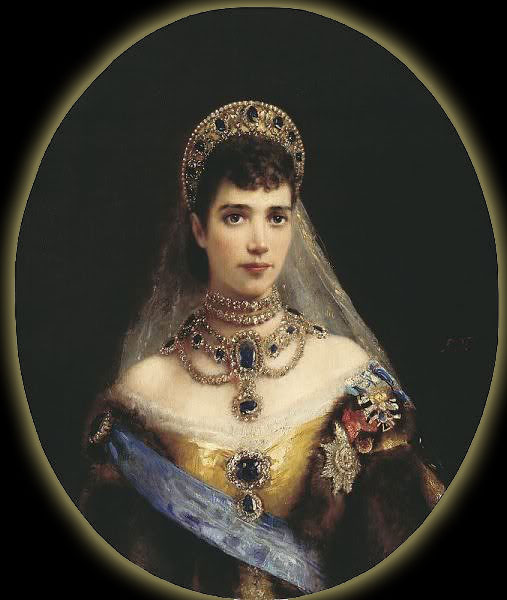
An Unexpected Majesty

mariafeodorovna2

– a review of Ormonde Jayne’s ‘Tsarina’

Opulence, luxury, complexity. What do you think about when you read these words as they relate to perfume? Do you think of perfumes or houses that come to mind with all their own associations and aspirations, or are you anything like this slightly jaded post-punk catastrophe and begin to wonder whether there’s a particular thesaurus for perfume copywriters that pulls out these words at the drop of a new perfume launch and think jaded, cynical and more than a little sarcastic thoughts:

Right. Of course it is. It couldn’t possibly be anything at all else!

Then again – such are the tribulations of a perfume writer’s life – there are moments when those words light their own fragrant bonfires underneath a combustible imagination with all that entails.

In perfumista terms, such moments are when lemmings are born. Your curiosity is aroused, your fragrant imagination awakens, and all cynicism instantly thrown right out the window.

Maybe this one. Maybe this time. Maybe…

That jaded cynic was yours truly reading of the launch of Ormonde Jayne’s ‘Four Corners of the Earth’ collection of perfumes, but my own experience with Linda Pilkington’s line told me that this wasn’t so much a product of florid PR copy but instead more firewood for that superheated imagination I call my own.

I can count on one hand the Ormonde Jayne perfumes that weren’t instant – and consistent loves, as well as the ones I’ll keep close by always – Tolu, Frangipani and Orris Noir, and the ones I’ll covet with a fury until I can call them mine. All with their own unique stories to unfold, all of them perfect for my own chemistry, all of them their own redolent bywords for, well, opulence, luxury, complexity.

Not only do I admire Linda Pilkington’s dedication and meticulous attention to detail, I also emphatically admire the imprint of her personal and highly refined aesthetic in her line.

So there I was those months ago, reading up on ‘The Four Corners of the Earth’ collection and the extravagant launch at the Orient Express, no less – Nawab al Oud, Montabaco, Qi and finally, Tsarina, and I knew I was in trouble. So much so, when a fellow Ormonde Jayne fan and perfumista friend offered a little Tsarina for sale, I swept in with no qualms at all and bought a decant – blind.

‘Baroque, complex, silks in sweeping dresses and fabulous jewels…’

Bring it on!

Now that I have it and have spent time with it, now that I know something of this Tsarina’s moods and caprices, I’m thrilled to say that this time, this one delivers on all my aspirations and wraps them up in sables and silks, but that’s no way to pay homage to such imperial – and imperious – majesty.

She enters the room and begins her story with a bright, sharp, diamond flash of mandarin and bergamot, but it takes no time at all before an elegant and supremely restrained hint of coriander and cassis usher in that opulence with fragrant, silken intimations of the florals at the heart, and such a bouquet of marvels they are, too.

Hedione – with its airy jasmine facets sparkling in the candlelight, freesia and jasmine sambac wafting all their flowery allure, yet these are no blushing ingénues but ladies in bloom, announcing an arrival in their clarion tones…

Iris. A magnificent, regal, velvety-suede iris that doesn’t require your adulation so much as demand it, just this once, so you don’t forget your proper place. This is an iris neither cold nor intimidating, but make no mistake – it knows to display its majesty well, and it waltzes so flawless, so perfectly beneath those crystal flower chandeliers, as you admire and adore her, you glimpse something of those warm, sweet secrets underneath. Vanilla and sandalwood, cedar, labdanum, the musky intimations that for all her majesty, she is still very much all woman underneath the silks, jewels and brocades of jasmine, iris and suede that declare and define her.

There are many surprising twists and turns in Tsarina, ostensibly a floral oriental but in fact, much, much more than that. It is nothing like the notes list originally led me to expect but very much more – a statement, unforgettable entrance and indelible memory both, undeniably feminine yet with strength and steel underpinning it. Not for the unassuming, the diffident or the eminently discreet – it makes a declaration and makes no apologies,demands no excuses, unless it were an excuse to wrap yourself in a sable-lined brocade mood, to sparkle spectacular in a baroque heartbeat beneath a crystal chandelier as only you can.

I could say this another way. No matter what quotidian, mundane life you lead and decisions you make, some days and some moments, you want to feel invincible, imperious, regal.

Wear Tsarina. Remember – for a moment, for an evening, for yourself, for posterity, for celebrating your own unique and unexpected majesty:

You own your world and everything in it.

It’s time to go and claim it for your own.

__________________________________

Tsarina was made by Linda Pilkington of Ormonde Jayne in collaboration with perfumer Geza Shoen. It is available at Harrods Black Hall Perfumery, London and at Ormonde Jayne boutiques.

Notes: Mandarin, bergamot, coriander, cassis, hedione, freesia, jasmine sambac, iris, suede, sandalwood, cedar, vanilla, labdanum and musk.

With thanks to Andrea, who made it possible.

Illustration: Her Imperial Majesty Maria Feodorovna at her coronation, 1881.

A Necessary Evil

THE DEVILSCENT PROJECT XIII

lamortparfumee2

– a review of Neil Morris’ ‘Lilith’ for the Devilscent Project

Do you know that feeling when the fine hairs on the back of your neck rise up in some numinous awareness you can neither articulate nor define, you just have the sensation that something – or someone is… there?

You see a glimpse out of the corner of your eye, hear steps on the stairs, scan the room as you enter, look down the street and yet, nothing and no one is there. Your imagination plays its tricks on you again, that occupational hazard all writers have that will manifest those shadows and echoes of their mind into being and another kind of reality.

I’ve felt that way for weeks, felt as if someone hovered just out of sight, just around the corner, just down the street from where I stood. Someone leaving a lingering trace behind, a fleeting memory, a touch of another human awareness, a nearly undetectable ribbon of interwoven light and dark, a few scant molecules hovering on like motes of dust sparking possibilities forth from the sun streaming through an open window.

It was like that. I was being stalked in some indescribable way, but what it was I didn’t know and couldn’t guess until today, when finally, the return of the sun and intimations of heat became too much for even this sun-starved, workaholic writer, and I could bear it not one minute longer. I put on my boots, my Poiret-inspired fur-lined winter coat and my teal scarf, and walked to the beech woods that hug the hills and line the fiord of this town I live and write in, searching for this slippery spring I couldn’t find, trying to forget that ephemeral presence of something …or someone who wanted to elude me.

I walked out along the path that led through the woods along the fiord, seeing the patches of melting snow that clung against a few north-facing beeches, saw the green beginnings of wood violets peep through last year’s weather-blasted leaves, saw celadon shoots that would soon become star-dotted carpets of aconites on the forest floor, and the wild garlic’s emerald tide that sang its own lusty, aromatic aria with the wood doves billowing in the trees above.

They all told me the same tale, all sang the same melody despite the chilly, easterly wind:

It’s spring, it’s spring, it’s spring!

I walked through the woods until I came to a favorite bench by a bridge across a stream, out of the wind but well in the sun, until I sat down for a while to breathe in April, and suddenly, without warning, the fine hairs on the nape of my neck rose up underneath my collar, and there it was again, that interwoven dark and bright, a revealing trail…of perfume.

It was sweet as the wood doves, heady as the promise of heat that lurked underneath the leaves, lusciously dancing somewhere between rays of champagne bubble aldehyde and lemon, bergamot and a deeper, candied apricot the color of September, the faraway taste of an unimaginable, future October.

Which was when I saw a fleeting shadow underneath a beech across the bridge, and as I inhaled that perfumed ribbon in the air and the ambient perfume of burgeoning spring, that shadow froze, grew deeper, darker, ever more substantial and less spectral, until finally, it materialized, as real and as solid as the soaring gray columns of the beeches around me. A woman, impeccably clothed in a black wool suit and coat, flawlessly coiffed, impossibly, inhumanly perfect, with the April light caught in the ambery glints of her hair.

It was Lilith, Queen of the Succubi. Long dead yet never, never forgotten, she haunted me still with her presence, her story, her tragedy and her beauty, too. She walked across the bridge, her boots tapping out a steady 4/4 on the mossy, slippery boards and sat down next to me on the bench.

For a moment, we sat in silence, listening to the birdsong and the wind in the trees above, watching the squirrels chase each other on the boughs over the stream.

“Did you know,” she said after a while, “I was born only a few miles away from here, some very long time ago.”

“I did know. I promised myself, if I ever write the prequel, I would write your story, of how you came to be what you are.”

“What I was, you mean. Ah, the promises of writers, as substantial and as solid as anything I could scribble on the water in that stream.” She nodded toward the gurgling water down below us, chattering to the birds above as it rushed downhill to join the water in the fiord. “You’ll have other ideas. And an agent who tells you which ones to sell and ways to sell them, and which ones to drop.” She picked up a pebble on the ground and threw it into the stream. “You’ll move on to another life far away and other stories and other demons you’ll conjure on virtual paper to haunt your readers, whereas I…” her voice trailed off. “I’ll live between the pages of a book you wrote a long time ago and a story you told the world.” She kept her eyes on the beeches across the bridge.

“So long as one person remembers you, you are immortal,” I quoted. “You’re forgetting something. You’ll live on in four perfumes that illuminated you in four different ways.”

She stretched out her legs. “How fitting, it was four perfumes. The first, Ellen’s, that of power, initiative, will and domination, one perfectly poised and perfectly poisoned fragrant attack, Maria and Alexis’, such a velvety balance of contradiction and opposites when I see what the protagonist will do, Kedra’s majestic Babylon Noir, culmination and advantage. Fully appropriate for the Queen of the Succubi. And now…this one. Fitting, it should be the fourth, and the last of my perfumes. The number of persistence and endurance and evolution.”

As she said it, she looked up into the crowns of the trees far, far above us, where the buds on the branches echoed the intricate lace of her suit against the sky, the nearly abstracted complications of an opulent rose and decadent narcissus thrumming her floral secrets out on an April wind. Rich, beautifully evolving, endlessly compelling, as mysterious as midnight and as dark as her heart.

Down below, the stream carried our words out to the fiord and into the Baltic, out to the world and its endless, roiling oceans.

“A bit ironic, how imagination works in such nefarious, diabolical ways.” This time, she turned to look straight at me. I was struck yet again how much my creation resembled me, and then again, not at all. “I mean, ironic, is it not, that it took a woman to understand the Devil – at least as you did – and it took a man to understand my motives and reasons, and then captured them in a perfume?”

“Well, I’m not surprised. Neil is exceptional at that. It’s what he does so beautifully, and so successfully. Perfumes are hardest of all to articulate, unless you know how.” I shifted on the wooden bench, and now, I supposed we looked nothing more nor less than two friends chatting on a bench in the sun on a spring afternoon.

“You do that well. This…” she breathed it in deep, “is a Lilith to remember. That narcissus! Is it narcissus? The illusion of vanity, or just its reflection writing on water, on hopes and dreams that are just as substantial. The rose to tell another tale, that once upon a far-off time I did love and I did care, and I was not so evil nor so unforgiving.”

“I think it’s funny that we always need to explain evil,” I said. “We have to understand it, understand its motivations, and the evil we can never comprehend is the evil that has no reasons, no rhyme, no…rationale except its own existence.”

“You’re right, of course.” She breathed in again, and in the air, the rose faded to a memory as the narcissus drew up smoke and mirrors, more illusions and mysteries, was it tobacco, subversively, seamlessly folded into Lilith’s depths, a touch of arcane labdanum, the unifying theme of all the Devilscents, and coumarin – all grassy, new-mown hay, lighting its own bonfires beneath narcissus, the fires it took a woman like Lilith to inspire.

“Except sometimes” she pushed her hair back over her shoulder, “evil is a necessary counterpoint to good, like dark to light, to make us appreciate what we would otherwise take for granted.”

If evil were the sum and total of this lascivious, decadent drydown, it would be hard to imagine it as anything bad.

“Like antagonists in suspect first novels,” I said. “They have to be bad to make the hero look good.”

“No,” she stated, with a flat finality, with shades of her former resolute self and to my complete surprise. “They have to be bad to get the hero to move, to get the story to evolve, or otherwise, what story is it? Who would read it? Human lives and real life stories are plenty banal enough. Readers want to live vicariously, want to feel that thrill of suspense and the awe of the unknown, because so much of it has been eradicated from your lives.”

“You’re right.” I was not so arrogant, I couldn’t concede that much. It was impossible to be arrogant on such an April afternoon.

She stood up. “Of course, darling! I always am. So what was I, caught in the liquid filigree of this perfume of Neil’s? Was I that paradox of femininity, the sweet and the light, or the deeper, darker floral heart? Was I all illusion, as all characters in novels must be, yet an illusion you somehow made real? Or did Neil do that, explicating all that Lilith of the Succubi must be, should be – less a villainess for the ages and more…a tragedy of beauty? I’ll tell you. But first, you must make me a promise.”

“A promise? To the Queen of the Succubi? That sounds like a dangerous prospect!” I laughed, laughed since I knew where this was headed, I knew Lilith that well.

“Yes!” Her face was so earnest, her voice so adamant, I felt it as much as I breathed it in that perfume of promise and deliverance, of enigma and explanation. I rose to my feet, and instantly, she grabbed me by my collar. “Promise me…to take it out into the world, promise you won’t let this hope die, promise me I’ll live on forever after today.” She looked me right in the eye as she said it, not as the Lilith I had known and feared for so long, but as the woman she must have been one very long time ago, not so far away.

“Promise!”

There was nothing else I could say. I thought – in that heartbeat from one moment to the next where all possibilities lie, where stories are written, where everything, everything changes – of all my fears of failure, and all my black and far bleaker terror of success, and then, I knew it. I could feel it in my bones and in the wind, feel it in this liquid filigree of a perfume and its potential.

“I promise.”

She walked toward the bridge and began to cross it, and as she did, as the wind carried her perfume with her, wrapped her warm in her secrets and her story, she grew more and more transparent, more and more ephemeral, like the breath of a narcissus in April. I saw her go, felt that perfume fade with a pang in my heart, for I knew I would never see her again except where I saw her first – in that dark place in my mind I never knew I had until she told me through my words.

“So what was it?” I shouted into the wind. “What were you?” My voice sounded haunted, misplaced in this spring wood of beeches and flowery covenant.

I heard a laugh as a puff of wind blew her away into the air, blew her perfume into a limitless blue sky.

“You didn’t know?” she called out, from beyond the bridge now, gone with her evanescent perfume, her own promises and portent. “Tell Neil – he got it right! That I’m all of this and one thing more, one thing you should have known.”

As if the trees wanted the answer too, the wind quieted down, the birds in the trees stopped singing for an instant, even the burbling stream ceased its song and Lilith’s voice was all I heard.

“A necessary evil!”

She laughed again, laughed with all her smoky promises, laughed like that narcissus must have at the wonder of the spring, and was gone.

The stream carried out her words and her perfume into the fiord, into the Baltic, and into the ocean of the world.

————————————————

Neil Morris‘Lilith’, created for the Devilscent Project, is available through his Vault collection of perfumes.

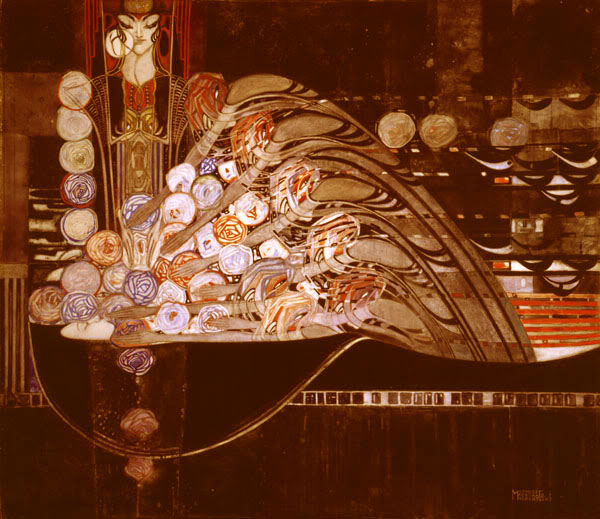
Illustration: Margaret Macdonald Mackintosh, ‘La Mort Parfumée’ (1921), pencil, watercolor, gouache and gold paint on paper, The Hunterian Gallery, Glasgow,  Color edit by me.

With profound gratitude to Neil Morris, and to Lucy, who inspired this review in a recent Skype conversation.

Sweet Little Monster

leon_perrault_s1002_sleeping_putto_small

– a review of Etat Libe d’Orange’s ‘Divin’ Enfant’

You see them everywhere, such a pop culture staple they show up on postcards, bags, posters, coffee mugs, internet memes. Cherubs. Those two trouble-making Raphael angels peering up into the heavenly domain, wondering what fun they’re missing.

But in Renaissance iconography, there is no such thing as a simple ‘cherub’. All those lovely, rosy, plump babes come in two varieties, the Cherubim, who are mainly preoccupied with matters celestial and not much interested events down below, and….Putti, who also have wings and also are babes whose cheeks you want to pinch.

The Putti are only interested in worldly matters – such as getting into as much trouble as they possibly can. I’m in no position to determine whether the Putti were simply a pictorial metaphor for toddlerhood (although I suspect that’s the case, having survived two, if just barely), or simply a secular, philosophical counterpoint to the celestial Cherubim.

What I know is this: I have a thing for Putti. Something about them appeals to my sense of humor, or is it mischief?

Now, another kind of babe trouble lurks for the unsuspecting, only this trouble is an Etat Libre d’Orange perfume called ‘Divin’ Enfant’ (Divine Child), and this creature is no cherub, but all putto, all the time…

I know not a few perfumoholics who scorn the Etat Libre line for either creating that ultimate in <ahem> performance art perfume, Secretions Magnifiques, or else for cheeky, irreverent marketing and a penchant for iconoclasm – in their copy, their (stellar) artwork and even the juice itself.

Nevertheless, the fact is that Etat Libre d’Orange creates perfumes that are every bit as beautiful, as complex, and as arresting as anything at all else in niche perfumery.

This post-punk iconoclast happily dived into their line, enjoyed every minute and loved not a few. And in a fragrant world that has elevated itself in the collective mind as being above all else ‘haute’ (if not ‘haute-y’, or simply haughty!), with lofty inspirations and super-heated ad copy, it does wonders for my own internal perfumoholic bs-meter to come across a perfume house who makes no bones about their core philosophy, which I could sum up as:

Perfume should be…fun!

Enter this li’l Devil…Divin’ Enfant.
See those perfectly pink, pinchable cheeks? It’s the olfactory phrase – with all that might imply – of ‘Oh, Baby!’ Literally in this case, since the sweetest orange blossom you’ve ever had the pleasure to sniff bubbles forth like froth in a champagne glass, but this is no sultry siren awaiting her moment to lure you in, this is very much…Eau Baby, Eau! All insouciant, ebullient allure and innocence, it’s all you can do to restrain yourself to only being able to articulate vowel variations on a theme. That theme being…

Awwww…

How darling! How cute! How sweet! How utterly, totally adorable!

Adorable, yes, as all babies must be, and sweet, as they also must be or we’d surely eat them.

Don’t think that idea didn’t occur to me with Divin Enfant, since orange blossom – apparent from top to bottom – is soon joined in by a sweet, vanilla-tinged marshmallow, and go ahead. Shrug off your foibles and surrender to such charms. You might as well, since you’re feeling quite a bit fluffy yourself by now, with a grin on your face the width of the candy aisle, but who cares when sugar babies make you this happy?

Right at the instant when the perfumed permagrin is tattooed from one ear to the other, you sense ominous thunderclouds rumbling in the distance.

How can that be? This baby was eau so sweet and happy, exuding nothing at all but dimpled, rosy candied orange blossom charms when suddenly, what is this? Coffee and tobacco and leather, too?

Ah, yes. Remember, this enfant is divine…and those thunderous rumblings come ever closer as Divin Enfant pinches your cheeks and chews on your nose, as sweet and as alluring as ever, but this baby gets into all kinds of trouble, drinking your coffee as you look the other way, locating that clandestine stash of smash-glass-in-case-of-emergency cigarettes in the secret compartment of your handbag, chewing on the leather falls of that hand-braided flogger you snagged from a ‘friend’ last night that no one was ever, ever supposed to know about.

Naughty bébé, indeed! Or is it, come on, ‘fess up, you who are one naughty bébé?

It’s you. I know…

Right when you give up, right when every ounce of your ‘get up and go’ just got up and left, Divin’ Enfant sighs one last, spent sigh, a sweet baby’s breath of amber and musk, the far off vanilla tinges and that sublime orange blossom both fade away in the sunset hours (some very long time later), and…is out like a snuffed candle with that abrupt surrender to the inevitable all babies have – one second going at about 350 km/h, the next, sleeping sweet, cherubic dreams perched upon an amber moonbeam.

Divin’ Enfant is a putto and no cherub, despite all those angelic orange blossoms and that fluffy vanilla marshmallow. If I were to set an image to it, it would be Margo Nahas’ famous artwork used as the cover for Van Halen’s album, 1984 – that very worldly putto holding a cigarette in his hand that may (or may not!) be candy.

As it is, the best way to describe it would be either cutely subversive or else subversively cute, I’m not sure which.

Who cares? It’s fun.

In other words – one sweet little monster indeed!

Etat Libre d’Orange Divin Enfant is available at Luckyscent, everywhere Etat Libre d’orange perfumes are sold, and for EU customers, directly from the Etat Libre d’Orange website.

Perfumer: Antoine Lie

Notes: Orange blossom, marshmallow, rose, coffee, tobacco, leather, amber, musk

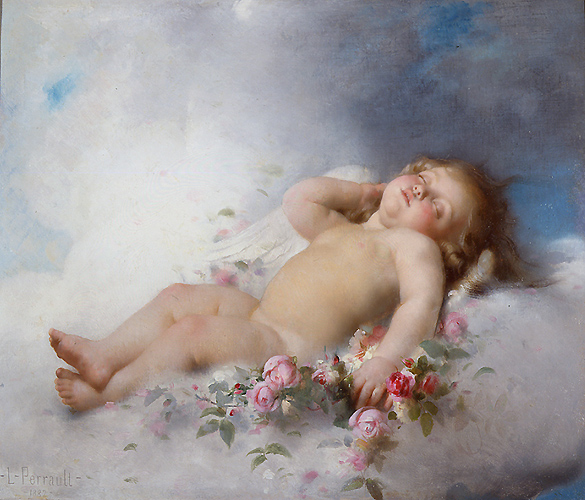
Image: Leon Perrault, ‘Sleeping Putto’ (1882)

Disclosure: Sample provided by Anthony of NKDMan, who likely thought I forgot. I didn’t. But I’m very, very grateful!

Chiaroscuro in Amethyst and Onyx

opusviiiris

– a review of Amouage Opus VII

Among all my many moods and frequent fancies, one moves me more than nearly any other and sets my imagination alight, the delicious, delirious champagne bubbles of …anticipation. That timeless moment when anything and everything is possibility, when hopes and dreams and wishes slither inside to fuel the fires of your imagination, assert themselves and remind you that anything can and will likely happen, that you might know and experience what you never did before, go places you never knew you could.

Even now, even today, even as it seems in this endless dreary winter that sent Spring straight to an icy fevered limbo, anticipation takes hold and bubbles away in my mind, even as I have a slight hint that my anticipation might be just warranted enough, justified enough to make these fragrant hopes and ephemeral dreams a little more real, a little less dream to catch as it flies.

This day, this instant, my anticipation has a name, a prosaic name from an anything but prosaic house, the house of Amouage, and the name is nothing more and nowhere less than… Opus VII.

Once upon a time, the Library Collection line of Amouage seemed to be a counterpoint to their main line, scented sonatas as opposed to symphonies, Schubert lieder rather than full-blown Wagner operas, or novellas as opposed to doorstopper novels.

So I even believed at the time, until an inkling that arrived as the same time as Opus VI became a definite suspicion, if not a proven fact with the arrival of Opus VII.

You see, I suspect that the Library Collection is where Creative Director Christopher Chong gets to play with ideas and concepts that somehow fall outside the scope of the main line, where he might want to do things and say things on a different scale and to a different end.

Here is Opus VII at last after months of speculation, here is another concept and another idea. I have no press release to cling to nor any reviews to eye at a distance, no list of notes, nothing to go on. I am simply flying blind by my nose, walking that tightrope walk between my words, my emotions and my impressions without a safety net, and all I can hope for is not to fall flat on either my words or my face.

It is like nothing I expected, nothing I thought it would be. Nevertheless, it is an Amouage, and therefore, nothing if not surprising.

What would it be, so many of us wondered, would it be an iris, asked some people, would it be a leather, would it be anything at all like its predecessor?

I could answer all of those questions, but that’s no way to review an Amouage.

Opus VII is an iris, an iris apparent to my questionable nose from start to finish, an iris that refracts and shimmers and sparkles not with intimations of a light and airy, chilly spring, not at all like any famous irises you might think you know. Instead of light, it gives you a decadent, delectable and nearly Gothic twilit dark, instead of repeating all those famous orris commonplaces, it delivers something else, something unexpected – it gives you an iris with a haunting, slightly foreboding edge. Not ominous so much as arresting, compelling your attention in an instant.

Orris butter has so many facets on its own, far more than the flower its rhizomes sustain. With Opus VII, you will find in the opening alone not a few of them, interlaced with each other in compelling ways I can’t recall ever having encountered before. An earthy, spicy jolt to my senses of black pepper, an opening sunburst song of bergamot and maybe a touch of grapefruit that winks on your skin and is gone before that most regal, midnight purple iris steps forward to command your attention, as it surely will. Not a cold, chilly iris, not even so haughty as many irises are, but still a touch…imperious, as all irises should be.

This iris – borne up by a supporting cast that might include davana, a note that always, always haunts me and stops me cold, glows with a whisper of dark chocolate which could be patchouli, a basso profondo, poised pulse of labdanum and frankincense (that glorious frankincense Amouage uses like no other brand I know), and another arresting note that also always compels me like few others, a note I think might be a supple, silky smooth myrrh.

If that were all Opus VII were, I’d be beyond thrilled.

It’s not.

Understand, all these disparate elements take hours to show themselves in the spotlight. They wend and weave and dance their separate measures throughout, sometimes appearing clear as day, clear as a key light shone upon them, before they imperceptibly recede and retreat, only to reemerge from the shadows when you least expect them.

Now you smell them. Then, you don’t.

Suddenly with a shock of awareness, they appear again.

And then.

Then comes another thread, another ribbon of dark, refracted light that spirals from top to bottom, from start to finish and back again, and this is called leather in still another midnight shade and hue. As soft and as pliant as a flawlessly fitted glove, as luxurious and dense as suede, it seems neither one nor the other, but the hide of some otherworldly animal, caught and tanned if never tamed by some sleight-of-hand, arcane secret we mortals may not know, but only have the privilege to breathe in.

Call it hyperbole, call me out on my exaggerations and verbal excess, yet I tell you…this is what Opus VII is and these words are the story it tells me.

Since my sample arrived, I’ve spent not a little time with its wonders. I’ve sprayed my skin, I’ve sniffed the bottle, I’ve immersed myself by spraying not just myself, but my pillows and my Tibetan prayer flag, too. I’ve been more than a little obsessed with it in a way I’m not normally accustomed to. Through not a few days and the nights that followed those days. I’ve tried to capture the djinn as they flew and listen to the story they told, wondering where that story began and how it ended.

When my own realization hit, it hit through music, as happens often in this musically obsessed household. I sat and listened last night to Igor Stravinsky’s ‘Rites of Spring’, and as I did, the djinn within Opus VII began to dance with far more abandon than even the great Nijinsky could manage, dance as they told a story of emerging from the depths of an endless, icy winter, of springing forth from the shadows and next, running back to the twilight gloaming that conceals them.

They laughed at my pretensions and my anticipation, only to wrap me snug and warm against the sudden, shocking chill of early spring with that otherwordly, chiaroscuro silk velvet pelt of amethyst and onyx, of iris and pepper, frankincense and labdanum and a deft touch of patchouli, of leather and myrrh.

An emergence, a story, a dance, anticipation, a plush, velvet olfactory pelt of an otherworldly animal the world will soon know as…Opus VII.

opusvii

_______________________________

Amouage Opus VII was created by perfumers Alberto Morillas and Pierre Negrin in collaboration with Amouage Creative Director Christopher Chong. It will be available from Amouage boutiques and Amouage retailers from mid-April.

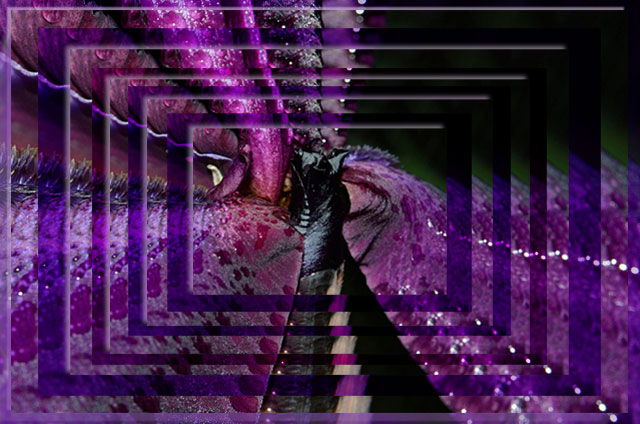
Image 1: A black iris bud, via Wikimedia Commons, adapted by me.

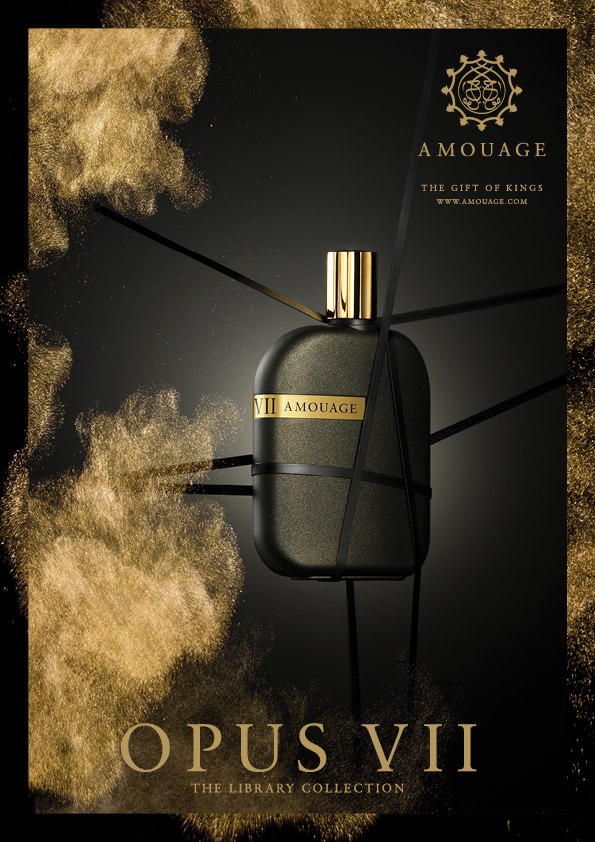
Image 2: Opus VII presentation, courtesy of Amouage. Used by permission.

Disclosure: A sample of Opus VII was provided for review by Amouage. The Alembicated Genie is never endorsed by any perfume house or company, all reviews are original, I’m never compensated for reviews and all stated opinions are my own.

*********Addendum*********

Since writing this review yesterday, I’ve been informed by a reliable source that Opus VII does not, in fact, contain iris at all. So I’ll proclaim the Humpty Dumpty rule of (terrible) perfume analysis and say…Your Mileage (and sillage) May Vary. But such were and are my definite impressions, and as it is, my review remains.

***************************