A Rose of a Manifold Stripe

striperose

– a review of Serge Lutens‘La Fille de Berlin’

So rich in facets and form, so varied in color and so infinitely complex the perfumes that lingers within its velvety folds, it’s no wonder the rose has so many names, and so many smell so sweet. Some roses imbue the ambience of a summer day when they sing on the skin and other roses emote in alto, moonlit voices of alto, starlit dreams.

By any other name it might well smell as sweet (as not all roses do), and yet somehow, I feel that simple syllable ‘rose’ is much too simple and much too short to encompass all the many stories a rose can tell on the skin. Or is it that such a short, euphonious name for such a beloved flower contains at least as many stories, dreams and associations as the petals we can count?

Now, we have another rose, another tale, another song a rose can sing in all its dulcet hues, a rose with a new, untold story all its own … La Fille de Berlin, the Girl from Berlin.

Supposedly, La Fille de Berlin was inspired by that golden cultural renaissance of Berlin during the Weimar Republic, when everything bloomed – the arts, literature, the architecture and even the people to such an extent that 1920s Berlin today is a byword for a certain exuberance of mind and spirit that danced on the edge of decadence, and only too often fell all the way in with a defiant, Berlinerisch laugh.

But let M. Lutens tell the story:

She’s a rose with thorns, don’t mess with her. She’s a girl who goes to extremes. When she can, she soothes, and when she wants …!

Such a girl isn’t the first thing that comes to mind when I consider all things ‘rose’, yet I’ve dived into enough roses – and a few Lutens perfumes – to know I should expect the unexpected and brace myself for this story of a girl from Berlin.

Having never tried those other, famous roses, Sa Majesté La Rose or Rose de Nuit, I’ll take La Fille de Berlin on her own terms, thorns and all, such being the price you gladly pay a rose…

She is no ordinary rose, no common cliché of ruby red, sunlit yellow or moonlight white, she is a rose of variegated hue, striped in folds of crimson and cream, reality …and dream.

The dream is all a rose, and the reality is a luscious, luminous rose in a photogenic pose. It breathes a husky, sweet, innocently raspberry-tinged song which tells me a violet is laughing in the mix somewhere. A violet without a hint of powder or lipstick, a violet that coaxes on this lovely rose to other places, places that crave the fire and heat of peppers pink and black and determination, places that demand instead of asking nicely, places unexpected.

Surely, I never did expect what happened next, for inside this glowing daydream of a rose lie her thorns and her backbone, with an icy-metallic twist. Not iron, not any obvious kiss of steel or stone, but altogether lighter, tighter and thoroughly new, titanium thorns you never thought to see through those rose-tinted glasses, a faraway taste of blood and kisses, the price you willingly pay for knowing this girl and this rose.

Ah, but she has so many stories, so many tales, and even this one is still evolving, still opening up its petals to bloom as you watch and you breathe, still reeling with the surprise of those thorns and that determination.

Now you know her secrets and you know to keep them well, for now she shows her softer, muskier self, now this rose will all her pleasures prove with her animal, feline purr, she’ll kiss and laugh the pain away to make you forget those fatal thorns, make you forget all you thought you knew in one blinding bright surprise, make you forget there ever was any other rose or any other girl than one unforgettable, indelible girl from Berlin.

When she wants…watch out!

With such a story and such an inspiration, the obvious association would be that most fatale of femmes, Marlene Dietrich as Lola-Lola in ‘The Blue Angel’, as she entices her ardent admirers ever onward to despair and ruin.

camilla horn2

Camilla Horn in 1927, hot off her breakthrough success as Gretchen in F.W. Murnau’s ‘Faust’

My impression is another one, another – regrettably forgotten – girl who came to Berlin and claimed it for her own, a girl who went on to fame and fortune, but a girl who somehow embodied not just all the allure of all ‘les filles de Berlin’, but also her many charms and her underlying innocence as Gretchen in F.W. Murnau’s ‘Faust’ (one of my own favorite movies), and that is Camilla Horn.

She is all of a piece as Gretchen, with all the hope and innocence of her kind – but with all that titanium will and determination.  All the many beauties of a rose of manifold stripe, all the seductive secrets of this…Girl From Berlin.

So long as you remember – she rocks …and she shocks! 

 _________________________________________

Longevity is outstanding, and although this slants toward the feminine, this would be devastating on the right kind of man.

Notes: Rose, pink pepper, violet, black pepper, musk.

La Fille de Berlin is available from the Serge Lutens website for EU customers, and from Luckyscent and Barneys NY in the US.
Baudelairean Blooms


woodviolet – a review of Parfums Serge Lutens’ ‘Bois de Violette’

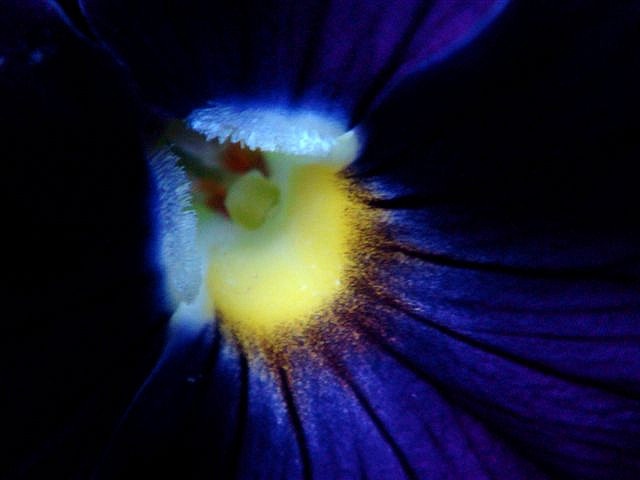
Among the many blooms adored by perfumers and perfumistas alike – the regal lilies, the imperious irises, the fatal tuberoses, sensuous jasmines, opulent orange blossoms and that Empress of them all, the rose – one tiny, unassuming spring flower stands half-concealed among this distinguished bouquet, not doing much to call attention to itself, unless it is to confer its own sweetly green air of innocence and youth, so charming yet so modest. Or else it reminds us of dear, departed grandmothers and aunts and their fondness for posies and pastilles, candied petals on chocolate cakes and tiny, mauve soaps languishing in a porcelain dish you never dared to use, stamped with ‘Savon Violette’.

There’s a vintage if not old-fashioned aura around the humble violet, something that smacks of nostalgia, bygone eras, scented with a tinge of melancholy and the ephemerality of time. Marry the violet to rose in certain proportions and you get the fragrance and flavor of lipstick, pair it with its companion violet leaf, and you have an approximation of spring-in-a-bottle, all exuberant greens and bashful blooms playing peekaboo among the greenery. Many of those violets are lovely, sugary, as sweet and as substantial as fleeting promises you just know will never be fulfilled.

All the same, something haunts me about violet, something that tugs insistent on the edges of my mind and gives me an urge to bury my face in a tiny bunch of violets in a woodland glade, something that makes me want to grasp that ethereal perfume and bite it…

Which means I’m no fan of those sweet, restrained, grandmotherly violets. I like my violets with a Gothic edge, their dulcet melody of early spring tempered with an alto counterpoint. In other words – a violet that surprises me.

Here is Serge Lutens’ Bois de Violette, and as any reader of this blog knows, any Serge Lutens perfume is nothing if not surprising.

Bois de Violette and I did not get along the first few times we said hello. A glorious violet, so said the reviews I read, so I felt more than a little cheated when I smelled the ashen cedar tones of pencil shavings, and nary one violet beneath my nose.

It was a red flag in front of this Bull! When all I wanted to do, just as in the story of Ferdinand the Bull, was to sit in a sunlit spring field and smell the flowers.

Some time ago, a perfumista friend asked me if there were anything I would like to try from her extensive collection, and when Bois de Violette came up in the conversation, I jumped at the chance to finally grasp these elusive blooms and banish the pencil shavings to the cedar box they surely belonged in.

Many have stated that Bois de Violette is the sister scent of Feminité du Bois, and it isn’t hard to see the family resemblance in their structure, or indeed to recognize the jazzy riffs of improvisation over a familiar theme of cedar – and surprises. For all her heritage, Bois de Violette is not another Feminité du Bois and has none of her sister’s plummy, Bourgogne-tinted depths.

Instead, she sings in a different, higher register, and begins her own violet revolution by conjuring forth a fairy forest in emerald tones of green, and somewhere in the background, an intimation of shadows with that pine-cedar accord that never remains too far away. This may be a forest, and fairies may dwell here, it seems to say, but secrets and ghosts lie somewhere just beyond. Heed them well.

Except you won’t, for next thing you know, the fairies arrive, which is to say, the very violets that give Bois de Violette its name, and those memories of old-fashioned, old-school, grandmotherly violets are banished forevermore to that cedar box of mementos they surely belong in.

These violets have other, wilder stories to tell, stories with sweetly worded phrases of twilit purple dreams and candied hexameter breaths of leather and anise that grow darker as the shadows deepen and the violets sing their siren songs of dark green cedar, and you listen enchanted as they fade, and the cedar steps forward again to remind you – the hour is getting very late, and not all that grows in this forest is what it seems, and not all that breathes is as entirely benign as those fairies that sang away the hours on your skin.

In this enchanted forest of Faërie lurks a Big, Bold, Cedar Wolf, and it just might bite if you’re not careful…

Bois de Violette won’t overwhelm your surroundings as you wear it. It stays close to you, but never strays.

Instead, this is what you would choose to wear for your own pensive pleasure, whenever the mood for a little needed introspection with just a touch of joy grabs you, when the melancholy grays of endless rainy afternoons are almost more than you can bear, and you want a peerless, perfumed reminder that some day, spring shall return again, and light and life as well, hidden in a woodland glade to catch you unaware.

As for me, with my predilection for the Gothic in les violettes, I find that Bois de Violette is a liquid bloom that Baudelaire would surely appreciate, if indeed he wasn’t referring to them when he wrote:

Charme profond, magique, dont nous grise

Dans le présent le passé restauré!

Ainsi l’aimant sur un corps adore

Du souvenir cueille la fleur exquise.

Or in a freer translation I couldn’t improve if I tried:

It’s by such charms that Nevermore

Intoxicates us in the Now –

As lovers to remembrance bow

Over the bodies they adore.

Parfums Serge Lutens ‘Bois de Violette’ is available at Luckyscent and directly from the Parfums Serge Lutens website.

Quote from Charles Baudelaire’s ‘Un Fantôme’ (1861), translated by Roy Campbell 1953, courtesy of Fleurs Du Mal.

With thanks to two perfume angels who made such Baudelairean blooms – and words! – possible.