The White Jade Empress


– a review of Robert Piguet’s ‘Fracas’

When I was a teenager, my mother had a best friend who intrigued me no end. At that age, I was perpetually looking for clues to this whole thing called ‘Woman’, traits and ticks I should aspire to or imitate, and there was something about this woman that told me she might have a few answers.

She was the physical opposite of my mother in many ways, tall and Junoesque where my mother was petite, darkly exotic with Spanish gypsy looks to match, danced flamenco in her spare time, and always trailed clouds of some very heady perfumes. I can remember she wore Estée Lauder’s Cinnabar when my mother wore Shalimar and Mitsouko, and another one I recall that entered the room a good ten minutes before she even got out of her car, something exotic and nearly overpowering in its intensity, something nearly frightening to a teenaged girl.

For years and years I swore it was Fracas, one of those immortal perfumes that so many seem to have an opinion about. Only fairly recently did I realize it wasn’t Fracas at all, but the original Chloé in parfum form, but even as a teenager, I recognized one very important element both perfumes had in common.

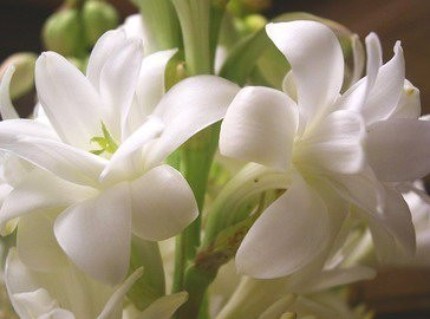
The tuberose.

Victorian mothers in the India of the Raj, so the story goes, forbade their virginal daughters to even smell tuberose, lest they get the kind of ideas that did not encompass lying back on their wedding night thinking of England.

Likewise, at the perfumed court of Louis XIV, hedges of tuberose were planted along the colonnade of the Grand Trianon of Versailles at Madame de Montespan’s behest, until courtiers began to swoon and even that notorious royal mistress had to concede defeat. “Not tonight, your Majesty. I have such a terrible headache…”

The tuberose has a heady, haunting scent unlike any other flower. It shares a few similiarities with jasmine, but unlike jasmine, it has a distinct opening blast that some people call gasoline/burnt rubber and others call mentholated mothball or bitter wintergreen, and right before you curl your lip with disdain and wrinkle your nose in disgust, it blooms into such ghostly, toe-curling, spine-chilling beauty there’s nothing you can do but surrender.

Once upon a time, I hated anything overtly floral. Once upon a time, I hated tuberose precisely because of that rubber/gasoline/mothball facet. Once upon a time, there was a time I had never tried one of the greatest tuberoses of them all – Tubereuse Criminelle by Serge Lutens. One day I took the plunge. And hated it! Still, I kept trying. There was something I wasn’t getting, some secret I couldn’t find just yet…

Until that one day it bloomed past the rubber and the wintergreen, and kapow!, I was done in by that sucker punch of beauty…I’ve loved tuberose ever since, in perfumes such as Carnal Flower (although that has a coconut angle that sometimes turns on me), Estée Lauder Private Collection Tuberose Gardenia, or recently, the stunning Cepes and Tuberose by Aftelier.

Time to grow up, time to evolve, damn it, so when I had a chance, I requested a sample of Piguet’s Fracas.

Fracas is universally considered the gold standard of tuberose. Germaine Cellier, she of the elegant, green/leather chypre whip known as Bandit as well as the ultimate galbanum known as Vent Vert for Balmain, created Fracas in 1948, and just like her other two creations, it was an instant, influential hit. It has since been reformulated, like everything worth loving these days, but just as with Bandit, this version has been re-orchestrated with great care and the utmost respect for Cellier’s original classic.

I was lucky enough to receive Fracas in both eau de parfum and parfum versions so I could compare the two, and braced myself for the onslaught. It had taken me this long to sum up the courage to try it. Come on…how bad could it be?

Bad? What bad? What was I afraid of? What on Planet Earth was all this fuss about? Why is Fracas considered such a love/hate prospect?

The fact is, if you hate big, blousy florals, Fracas won’t change your mind. If the idea of a breathtaking bouquet of Loud, Proud, Grand, Glorious Blooms strikes terror in your heart, Fracas might induce nightmares of femme-eating flowers straight out of a blood-curdling Roger Corman movie.

Say it doesn’t, that you like your big, blousy florals, say you even like tuberose.

Say you’re a cynic, as I usually do, and few things surprise you. Fracas…did.

Because it is…beauty in a bottle. From the green opening to the opulent, white-floral heart all the way to a mossy, sweet drydown, Fracas is nothing less than breathtaking, nothing less than a flawless, stunning perfume that puts the tuberose front and center beneath a Klieg light on a red-carpet moment, while her ladies-in-waiting – and such ladies they are, too – sink to their feet around her in an admiring swoon that never detracts from the main attraction – Her Empress of Tuberose in all her heady, outrageous splendor. Since they are all present and accounted for, the supporting players that read like a Who’s Who of heart notes ensure that Fracas never becomes too one-dimensional and keep it complex and intriguing, never too sweet or too much. Having said that, wear wisely. This stuff is built to last, proof they don’t make them quite like this any more.

Suddenly, I understand the motivation about the Victorian tabu against tuberose. It gives you such…ideas…This is drop-dead, faint-making sexy, borderline over-the-top but never quite, incredibly classy and always, always the epitome of everything beautiful in tuberose. There is a slightly bitter tinge behind the blooms, a wintergreen touch I’ve recognized from other tuberose perfumes that is highlighted in the parfum, but either version sings in perfect pitch and timbre one stellar aria of that White Jade Empress of all man-devouring flowers…

Make no mistake. Fracas, I came to discover, is a man-eater. Apart from one man I know who doesn’t much care for florals at all, this stuff is devastating on practically everyone else. It will put the va-va in your voom, it will bring grown men to their knees, it will make indelible impressions. As it does, you will walk a lot taller, a lot sexier, you might even convince yourself to wear heels and stockings, silk slip and a garter belt to match.

It’s that kind of perfume. What the hey….live a little. Be sexy. Wear Fracas. Slay ‘em! They will be helpless to resist! It will stay with you and never stray, and it will never be less than a peerless perfection of a perfume to highlight that flower of all flowers…

That White Jade Empress called…tuberose.

Notes according to Basenotes:
Top: Bergamot, mandarin, hyacinth, green notes
Heart: Tuberose, jasmine, orange blossom, lily of the valley, white iris, violet, jonquil, carnation, coriander, peach, osmanthus, pink geranium
Base: Musk, cedar, moss, sandalwood, orris, vetiver, tolu balsam

Robert Piguet Fracas is available in many locations, and can often be found at online discounters without breaking the bank, unless you buy it in parfum. A big hug and thank you to Suzanne of Perfume Journal, who gave me the chance to try it in both versions.

_______________________________________________________

Starting today, Scent Less Sensibilities is taking a badly needed break for a few days, as yours truly indulges her Inner Rock Chick and predilection for a Primeval Force from New Jersey. I shall return over the weekend, and that’s a promise! Stay tuned for grab-bag mini reviews, another spotlight on another amazing Indie perfumer, and yet more fragrant wonders to come!

Bite me!


a review of Aftelier Perfume’s ‘Fig’

Some people, I’m told, are only able to associate a certain brand of cookie with the word ‘fig’. I feel sorry for them.

Not only are figs one of the oldest cultivated plants on Earth, grown before we even grew wheat according to archaeological evidence, they are also surely among the most maligned. They bring up associations of those lunchbox staples of my childhood, or else sorry, solitary dried Smyrna figs left over on a Christmas platter after everyone plundered all the dates and nuts, somehow reminding us of a future we try to keep at bay with sunscreen and retinoids.

Unwanted, unloved and taken entirely for granted, what could one possibly love about figs? I’ll tell you.

On a scorching hot day in August the year I graduated, I found myself in a fig grove on a hillside in Arcadia in the Peloponnese – in Arcadia ego – with a German engineering student from Stuttgart I somehow acquired in a Bern café and a bookish Swiss philosophy student who joined us on the ferry in Brindisi. This fig grove faced south into the sunshine against a vertiginous mountain, and I can close my eyes and recall that breathless heat beneath the shady fig trees that seeped into our bone marrow as we polished off the last of our lunchtime wine-with-no-label, the entire landscape around us eerily silent in the siesta. It was too hot to move, too hot to think, and yes, it was much too hot for that, too. So as we lay back and peered up into that green canopy above our heads, I realized that some of those figs were ripe, that a few were about ripe to bursting in that timeless August afternoon. The only figs I had ever known were dried, and here they were on an Arcadian hillside, sun-kissed and whispering loud enough to be heard over the goats’ bells in a distant field…

‘Bite me.’

Something about that purple-red flesh beckoning under skin the color of a livid bruise, something I needed to know. I reached up and plucked it, and as I felt it drop into my hand with a velvet soft thud, while the German watched with one eye open and the Swiss philosopher snored away his wine against a tree trunk, I finally understood how Eve felt, not long before she invented the world’s first sustainable fashion line.

In a ripe fig straight from a sunkissed tree is the sum entire of purple sunshine, an empire of sweet and savor, no relation at all to anything in dire need of a facelift on a Christmas platter. Fig contains hints of spice and earth, sweet and very slightly bitter to offset it. It’s the kind of fruit that practically begs you to tear your teeth into that oozing, seedy, perfumed flesh and immerse yourself face first into a whole new sensory geography of ‘luscious’. Add in the thyme-oregano scent of the Arcadian countryside, the still air of siesta in August, and the pungent aroma of rock rose that grows everywhere on the hills like weeds, and it all adds up to one seriously wicked indulgence.

This is what comes to mind when I wear Mandy Aftel’s ‘Fig’. That first, fatal fresh fig in my life, when my horizon shifted, my world grew larger and my taste buds were realigned.

I’ve worn and loved several fig scents, among them Diptyque’s ‘Philosykos’, all bitter-dry heat and Grecian sunshine, and Olympic Orchids’ ‘A Midsummer Day’s Dream’ which is far greener and grassier. Both are great for different reasons, but ‘Fig’ is something else.

Mandy Aftel’s version seems… red-purple like the flesh of a fig itself and it smells purple, too, with that fruity pink grapefruit tang and grand fir, say the notes, but there are no spikes in this evergreen tree. Woven around it like a promise is a green ribbon that must be the fir my head tells me, but my amygdala tells me otherwise. ‘Fig’ gives my amygdala ideas that are all kinds of fruity truths with consequences.

If gourmand is a perfume category based on sweet, edible-seeming perfumes, then this gourmand is the first ever perfume I’ve nearly wanted to eat. Every hint of fruit and spice a fig can contain is found here with the pink pepper and the viridian jasmine sambac that keeps it from ever once nose-diving into lunchbox cookie territory, blooming away on my skin with all its seductive anticipation.

All the while, this luscious purple-hearted perfume sings sotto voce of breathless August afternoons beneath the green canopy of an Arcadian sky, and right before I’m about to gnaw off my wrist, a heady drydown of Africa stone and fir absolute decide to do me in. Fig jam, says Mandy Aftel’s website, and if that’s what it is, I want to be tarred and feathered in it, I want to wallow in it, I want one fig grove instant to live eternal in my mind these thirty years later, when a velvet-soft, bruise-black fig fell into my hand to such fatal effect, bursting open to show itself, that fragrant, sweet, luscious, jammy, spicy, sexy red-purple flesh that whispered…

‘Bite me.’

Notes:
Top: Grand fir, pink grapefruit
Heart: Pink pepper absolute, jasmine sambac
Base: Africa stone, fir absolute

Aftelier’s ‘Fig is available from the Aftelier website, from Scent and Sensibility in the UK and from Sündhaft.

Disclosure: My sample was provided by Aftelier for review.

Image: visualphotos.com

Honeyed Blooms and Meadows Sweet

– Reviews of Aftelier Perfume‘s ‘Honey Blossom’ and ‘Wildflowers’

Last night, trying to ground myself after a frantic Saturday that completely conspired against me, I went out for a walk in the summer twilight, which this time of year is well past 10 PM. As I walked around my neighborhood on a Saturday night, noting the honeysuckle blooming on walls, the elderflowers with their musky, earthy scent that my compatriots like to convert into a favorite summer drink, breathing in all the ghostly aromas of a summer night in July, a luminous, intoxicating ribbon of something green and unmistakable wove its way into my awareness.

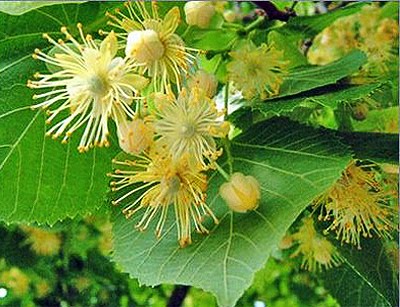
High summer is finally here, and the linden trees are blooming, and if ever a high summer night had a signature scent, linden blossom would surely be one of them. There could be no better time to review Aftelier Perfumes’ ‘Honey Blossom’.

‘Honey Blossom’ was created as part of a unique perfumer’s collaboration with Andy Tauer to highlight a linden blossom CO2 extract. Last year as the project unfolded, readers of Nathan Branch’s blog were able to get a unique look into the process of perfume making and the challenges both Andy Tauer and Mandy Aftel encountered along the way.

Andy Tauer created ‘Zeta’, which I reviewed in late April, and although I can certainly appreciate its beauty, I couldn’t wear it at all. I had no choice but to dub it the Honey Monster, because it very nearly ate me alive.

So I was more than slightly apprehensive when I opened up that tiny vial of ‘Honey Blossom’, wondering if this one, too would devour me whole and entire.

In a word – no.

‘Honey Blossom’, I’m thrilled to say, is an entirely different perfume, for all that it highlights the same linden blossom CO2 extract. Mandy Aftel chose mimosa, with its particular sunshine-yellow sweetness to highlight it, and these two, the mimosa with its almond/marzipan facets and the linden blossom with its green, heady character dance a perfect waltz in tandem, seamlessly whirling on towards a dizzying orange blossom heart that never dominates or takes over. The orange blossom opens up its doors and joins in that mimosa and linden blossom waltz and this somehow becomes linden blossom but better, a unique twist on a beloved summer perfume accord that normally tends to take the alternate name for linden – lime – a little too literally.

There is no lime in this linden, just the near-narcotically addictive, sweetly dripping nectar of the blossoms themselves that teeter towards honey but never do fall into the beehive, waltzing their sweet, joyous ménage à trois with the mimosa and orange blossom on my skin in dizzying figures that whisper of warm summer twilight and puffs of sunshine caught in thousands of creamy yellow blooms. As it dries down, a downy accord of ambergris and benzoin with its vanilla touch wind down the waltz and slow down the linden blossom to a glow that fades away like the stars above in a high summer sky that never gets completely dark at this time of year.

I’m reminded of those lines from William Blake’s ‘Songs of Innocence’, although here, the angels are the blooms of a linden tree…

“Unseen they pour blessing.
And joy without ceasing,
On each bud and blossom,
And each sleeping bosom.”

It was a privilege to be privy to the process of creating a linden blossom perfume through Nathan Branch’s blog, and an even greater privilege to be able to compare the two different interpretations of the same CO2 extract. Both ‘Zeta’ and ‘Honey Blossom’ share that same soft yellow glow, but the similarities stop there. I can admire ‘Zeta’ for the beauty that it is, but I can never wear it. Unrequited love is so over-rated! ‘Honey Blossom’ sings in a different key with a different pitch, pouring its joy and blessing on all things good, waltzing around in a summer twilight beneath the blooming linden trees.

‘Honey Blossom’ was one of three of Mandy Aftel’s creations (The others were ‘Lumiere’ and ‘Candide’, which I reviewed here) to be nominated as a finalist in both the European and American FiFi awards as Fragrance of the Year, Indie Brand.

Meadows Sweet

There was a moment back in January I can clearly recall on a July afternoon, a moment I stood outside my work on a lunch break on a dismal, cold, foggy day and thought to myself…this cold, this damp, this gray…is all you will ever know, and winter will never end. When summer seemed an all but impossible concept, some delirious fevered dream of light in a month that has so little at my latitude in January, and heat that seems so outrageous on such a chill, gray day.

I can remember I went home and wrote a perfume review that night, the kind that would remind me of what I knew but could scarcely believe in January…sooner or later, summer will return and the flowers bloom again, sooner than I always think it will be summer, and I will feel that delicious kiss of sunlight on my skin that makes me think of things I can so easily forget..like hope, like possibilities, like feeling every inch alive.

The review was for Olympic Orchids’ ‘A Midsummer Day’s Dream’, but where Doc Elly’s perfume takes you out on the grass and beneath the fig trees, from the bark of the wood to the leaves and the fruit in all its stages, Mandy Aftel’s ‘Wildflowers’ takes an entirely different tack.

‘Wildflowers’ is a solid perfume, a delicious way to wear perfume entirely for yourself and no one else. It has little sillage and an understated presence, but when something is this beautiful, I don’t much care. The feel of the solid on my skin is probably the best I’ve ever encountered in a solid perfume, smooth as silk charmeuse, and if this were a body butter, I’d buy it by the tub, it’s…that good.

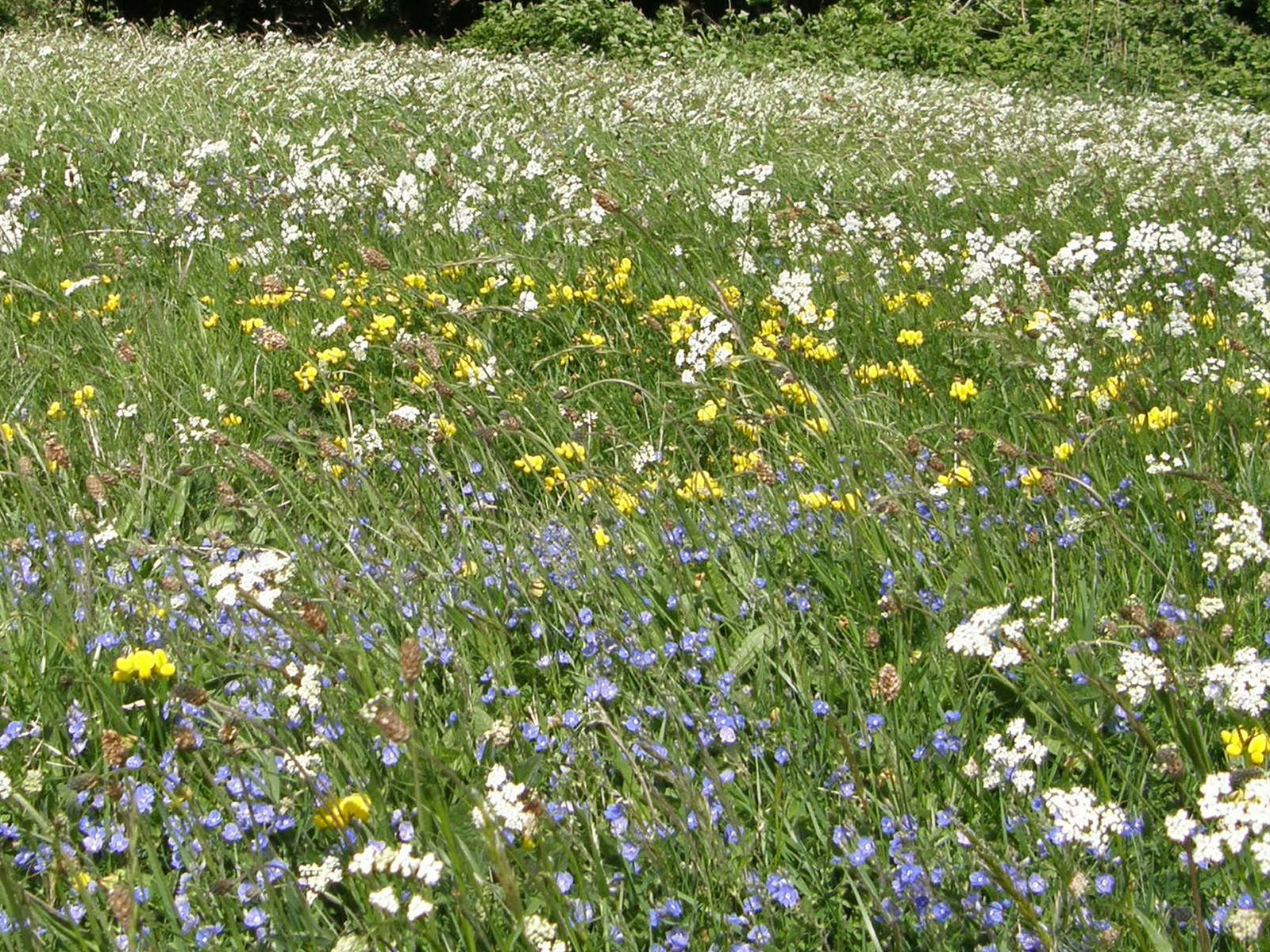
Instead of grass and a whole fig grove, this is a meadow full of flowers, all the flowers of a hot, perfect summer day of sunshine and blue skies, the larks singing high in the air and the buzz of bumblebees in the flowers, some of which you know, and many which you don’t.

So lie back in the meadows and watch the world from the ground as you breathe it all in….the verdant kick of lime awakening your senses to your surroundings, a whole bouquet of heedless, fragrant flowers blooming in random profusion and careless, elegant abandon by nature, all if it spelling the kind of peerless beauty artifice can never know, and as that meadow seeps into your consciousness, draining away all worries and cares, the demands of your day and the weeks ahead, a sweet scent of hay, some of it fresh-cut, some of it dried gathers force, and you become, as so often happens with Aftelier perfumes I’ve noticed, one with the moment, the flowers far too many and too beautiful to pluck and take with you, the larks in the sky above you and that sugary hay that is nothing more or less than the quintessence of every summer-blooming, sunshine-soaked grass that ever grows.

Maybe I should just amend that to…every summer day that lives forever in our memory, the kind we need to be reminded of on dismal, foggy January days. A memory, a recollection of S-u-m-m-e-r, period.

If summer somehow eludes you, if you need a reminder that some day, heat and light and sunshine will return, the wildflowers will bloom and hopes and possibilities will be every inch alive, that even you will be every inch alive and aware in a perfect meadow moment, then you need to try ‘Wildflowers.’

Meadows should always be so sweet, and flowers should always bloom in such plentitudes, just like those possibilities that seem such a distant, nebulous dream on a dismal January day.

Notes for ‘Honey Blossom’:
Top: Mimosa, linden blossom CO2
Heart: Orange blossom absolute, phenyl ethyl alcohol
Base: Ambergris, benzoin

Notes for ‘Wildflowers’:
Hay, wildflowers, Mexican lime

‘Honey Blossom’ and ‘Wildflowers‘ are available from the Aftelier website, from Scent and Sensibility for UK customers, and from Sündhaft.